Issue Tracking in QA Touch Link, Import, Share & Export
How to Manage Issues in QA Touch: Track, Link, Import, Share, and Export Defects
QA Touch has a built-in Issue Tracker for managing issues, the errors or failures of a test case that produce an unexpected result or cause the application to behave in an unusual way. You can add independent issues or add issues on the fly from a test run, link issues two ways with test case results, and track linked issues with QA Touch reports. The Issues module also supports custom fields, CSV/XLS/XLSX import, comments, issue linking, email and public sharing, status and assignee history, bulk custom field updates, and export to CSV, XLS, XLSX, or PDF.

At a Glance: Issues in QA Touch
| What it is | A built-in Issue Tracker for errors or failures found during testing |
| Create issues | Add independent issues or add issues on the fly from a test run |
| Linking | Two-way linking of issues with test case results; link test cases and other issues to an issue |
| Custom fields | Created in Administration > Custom Fields for a specific project or all projects |
| Import | CSV, XLS, or XLSX, including Issue Custom Fields Import |
| Collaboration | Comments with emoji, replies, share by email, and public shareable issues |
| History | Status History and Assignee History |
| Export | CSV, XLS, XLSX, or PDF |
What Is an Issue in QA Touch?
An issue is an error or failure of a test case that produces an unexpected result or causes the application to behave in an unusual way.
QA Touch has an in-built Issue Tracker, which facilitates:
- Add Independent Issue / Add Issues on the fly from the Test run
- Two-way linking of Issues with a Test case result
- Tracked Linked Issues with our suite of reports
How to Add Custom Fields to Issues in QA Touch
Custom fields allow you to organize any information that’s useful for your project and associate it with issues. When you create a custom field and add it to a project, it becomes available for all issues that are created in the project.
Steps to Add a Custom Field for Issues
- Login in QA Touch.
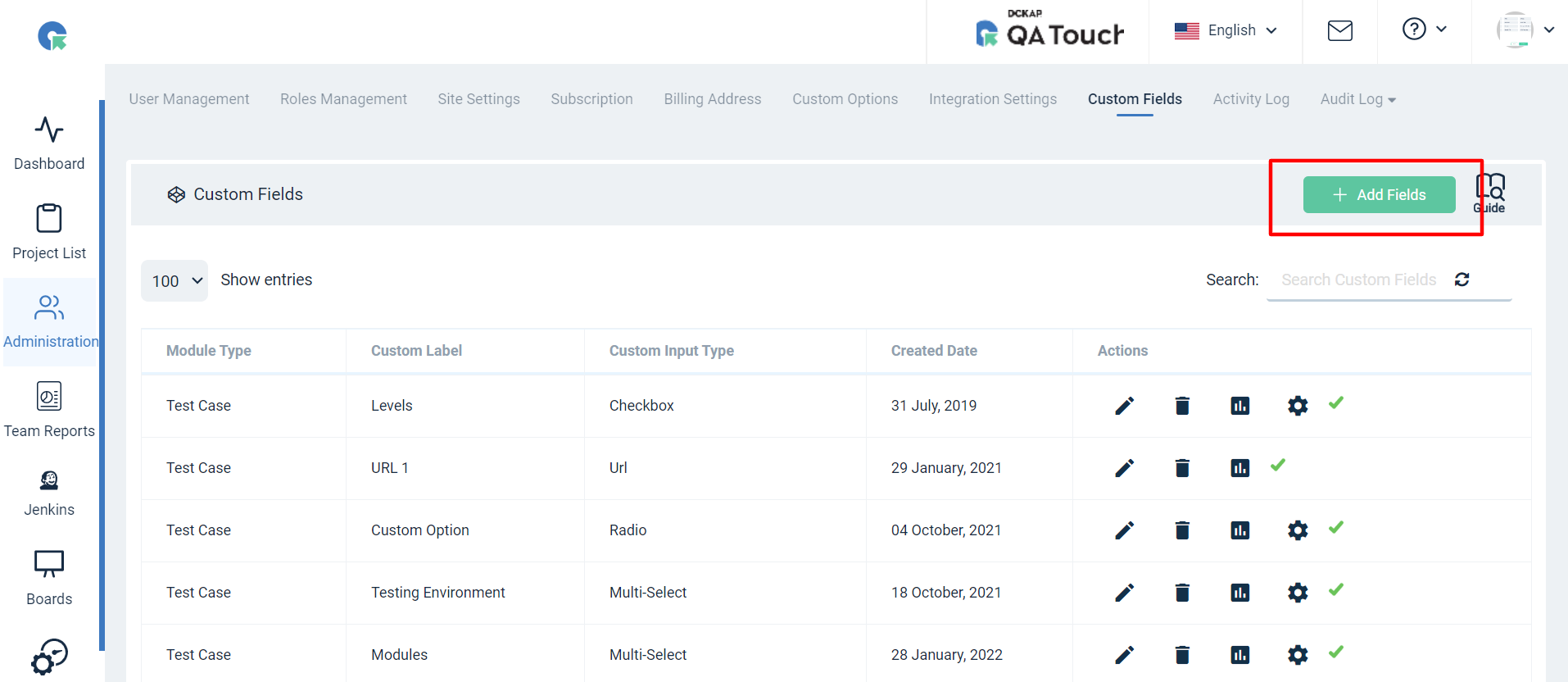
- Go to Administration > Custom Fields
- Click on add field button
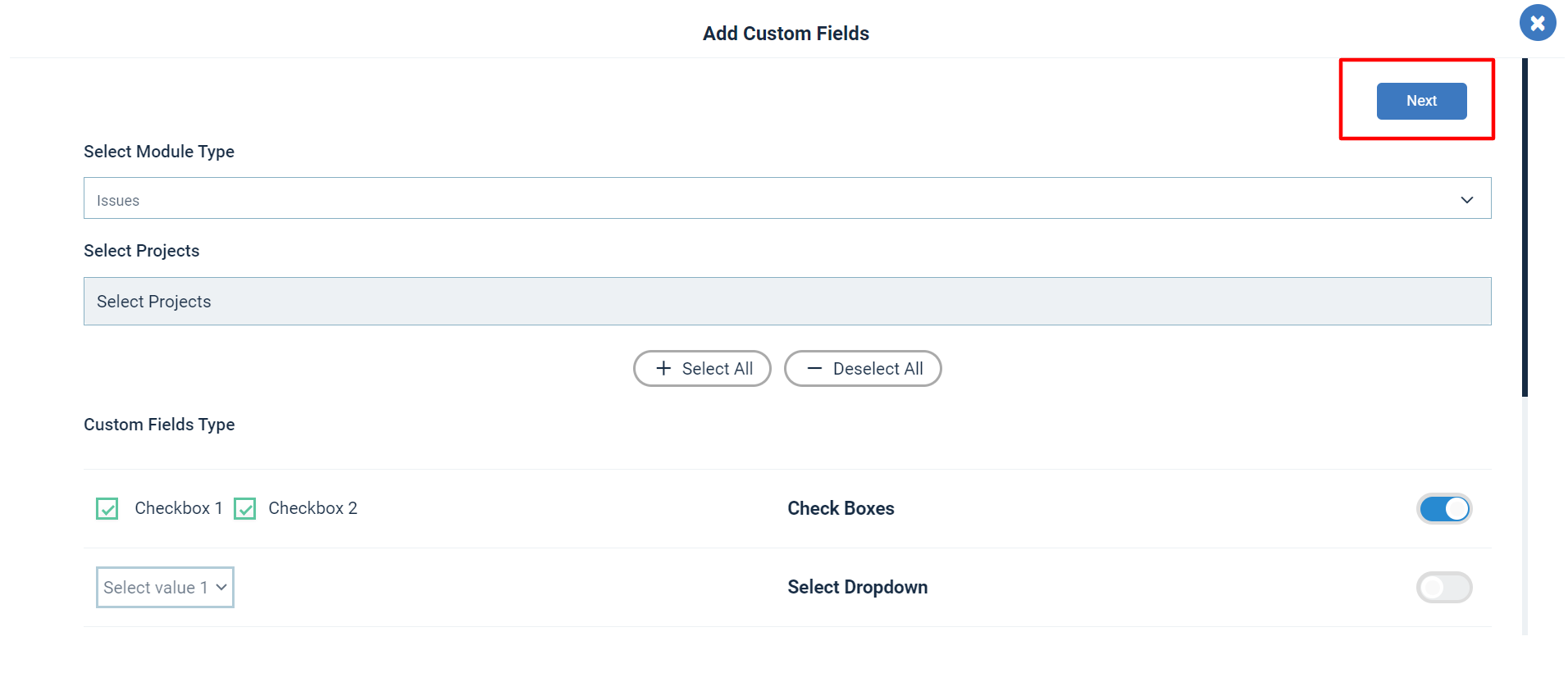
- Select issue in module type
- Select a specific project (OR) select all projects (as per requirement)
- Click on “next”
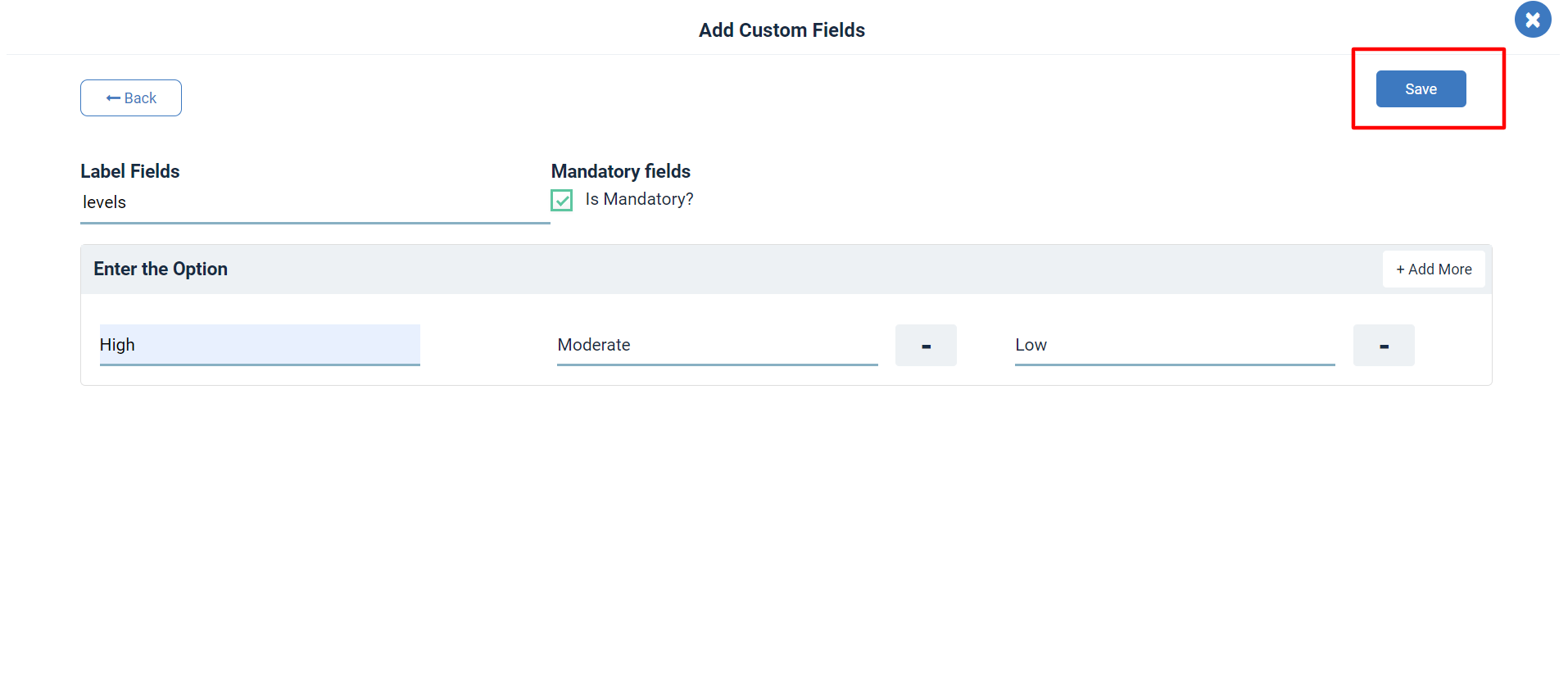
- Enter the Label name
- Add options
- Click on save
How to Import Issues into QA Touch
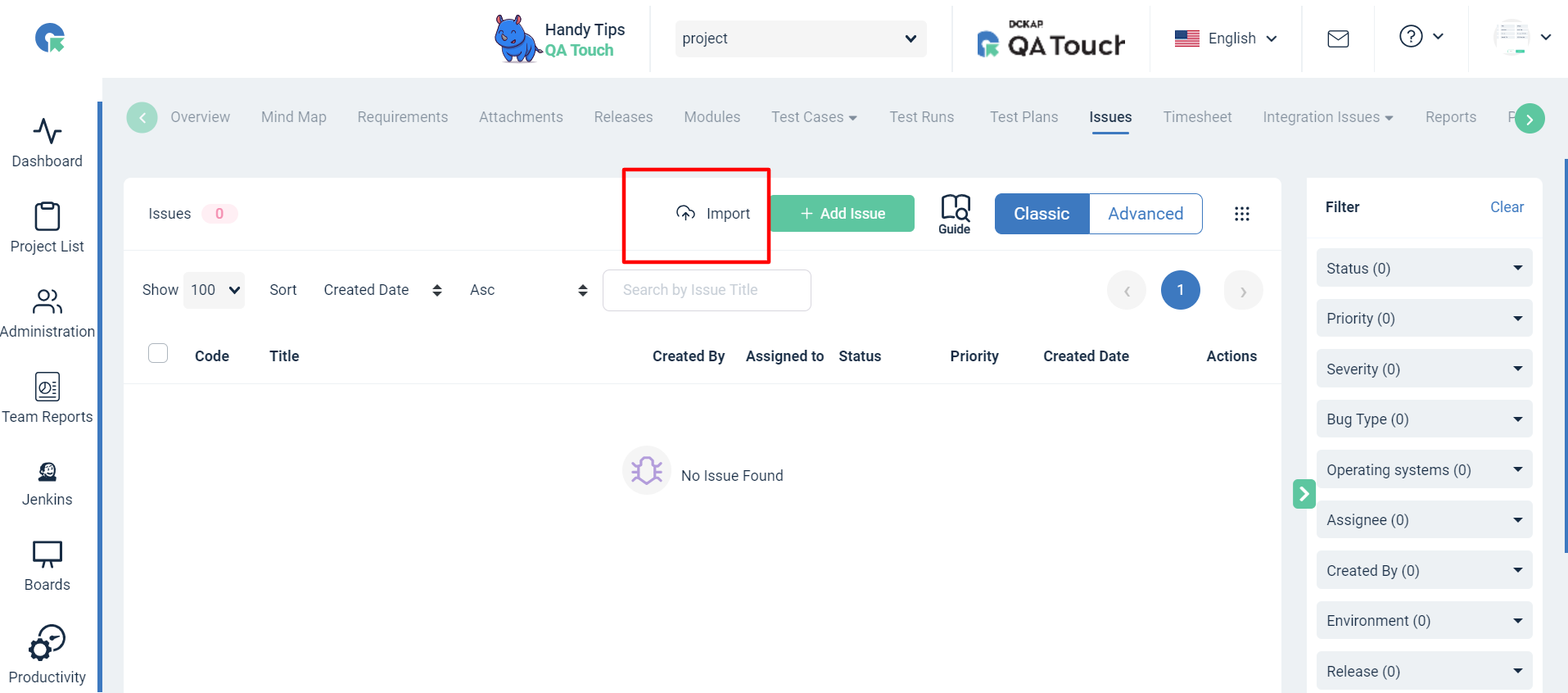
To import issues, click Import on the Issues List page, upload a CSV, XLS, or XLSX file, map your file’s fields to QA Touch issue fields, and click Import.
- In Issues List page, Click on Import Button
- Upload the file(CSV, XLS, XLSX) to import
- Map the fields in your file with QA Touch Issue fields
- Click on Import button (Note: Issue with valid status, priority, severity, environment, Issue type will only be imported)
How to Import Issues with Custom Fields
When you have created a new custom field and want to add many values to it, you can import them with the Issue Custom Fields Import option on the Issues page. New custom field values in your import file are created automatically in the issue custom field.
Step 1: Create a Custom Field for the Project
- To Goto Custom fields page, Click on Administration->Custom Fields
- Click on Add Fields, select the project you want to add the custom field to
- Select Field type and Add option if required. Click on save button.
To know more about How to create Custom Field Click Here
Step 2: Import the Custom Fields in Issues
Follow the below steps to import custom fields in issues page:
- After Creating the Custom field for the project, go to the issue page and click on the Import button.
-
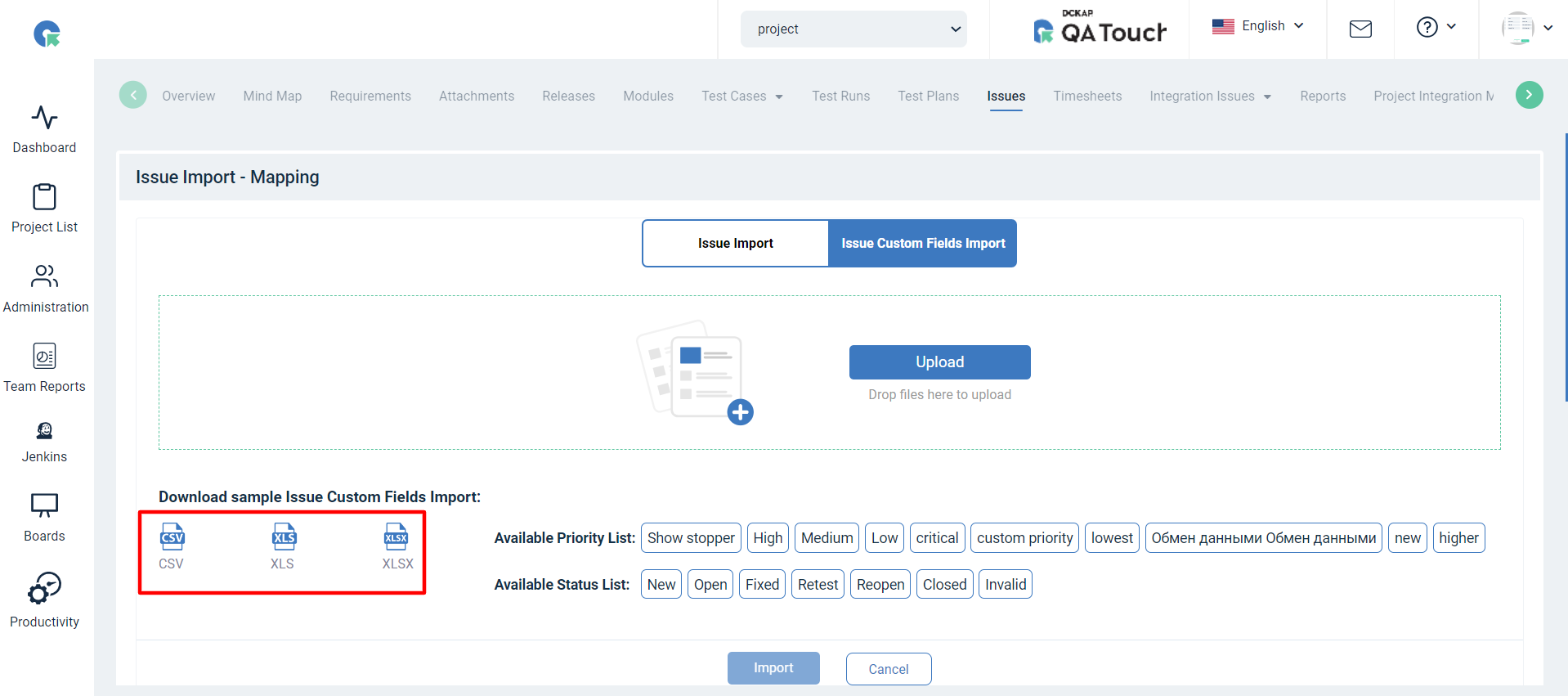
Then Select Issue Custom Fields Import On the issue page.
-
Download the sample Issue custom Fields (CSV, XLS, XLSX) Format
-
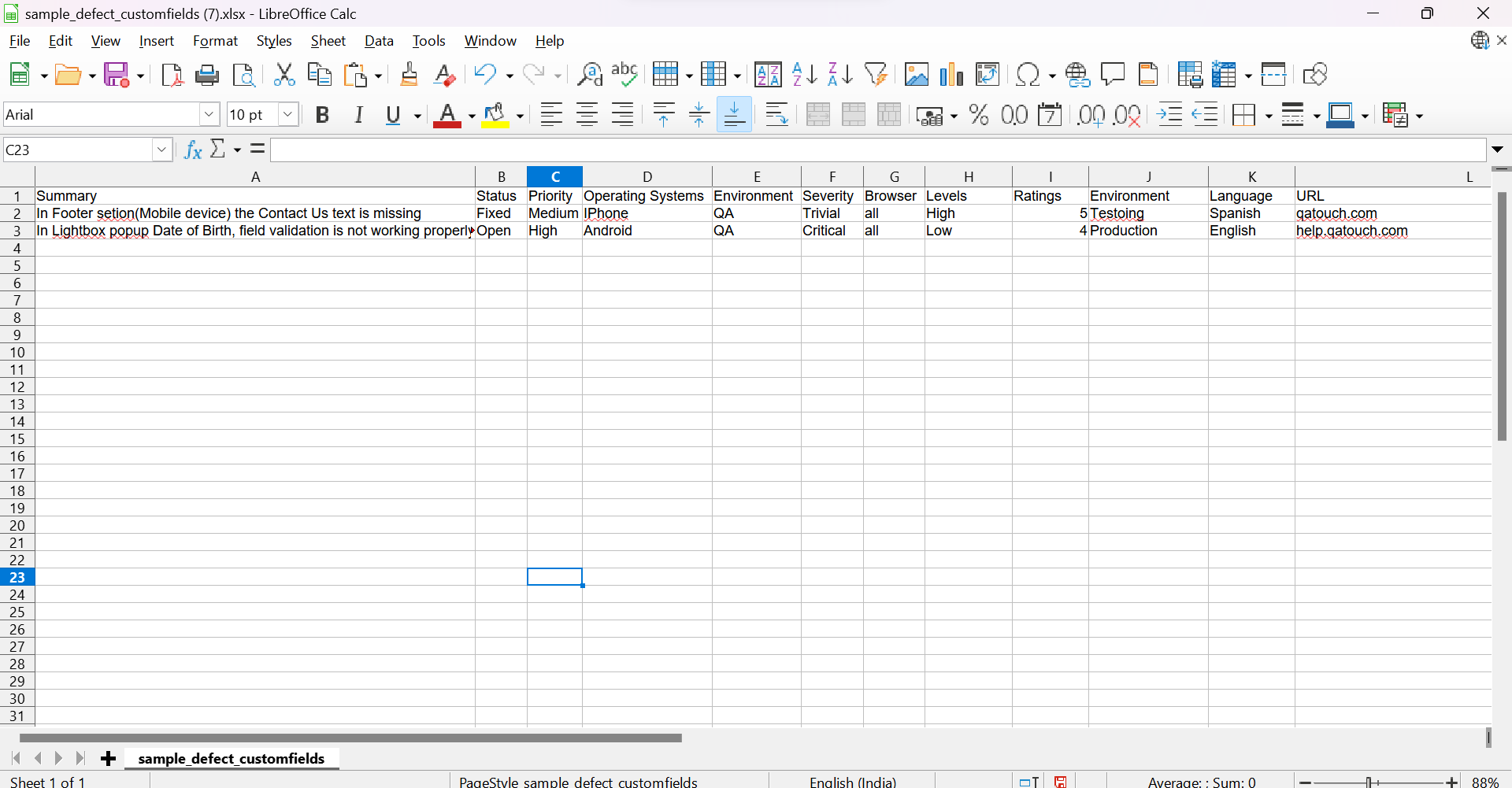
Open the exported file in any software (Excel, Google spreadsheet etc.)
-
If you specify new values of custom fields during this import, it will create the value in the issues custom field.
-
Upload the file (CSV, XLS, XLSX) to import.
Step 3: Map the Issue Fields and Custom Fields
After uploading the file, you will see the Mapping fields page. Map the required fields. The image below depicts the mapping fields in issues. The Summary, Status, and Priority fields are mandatory.
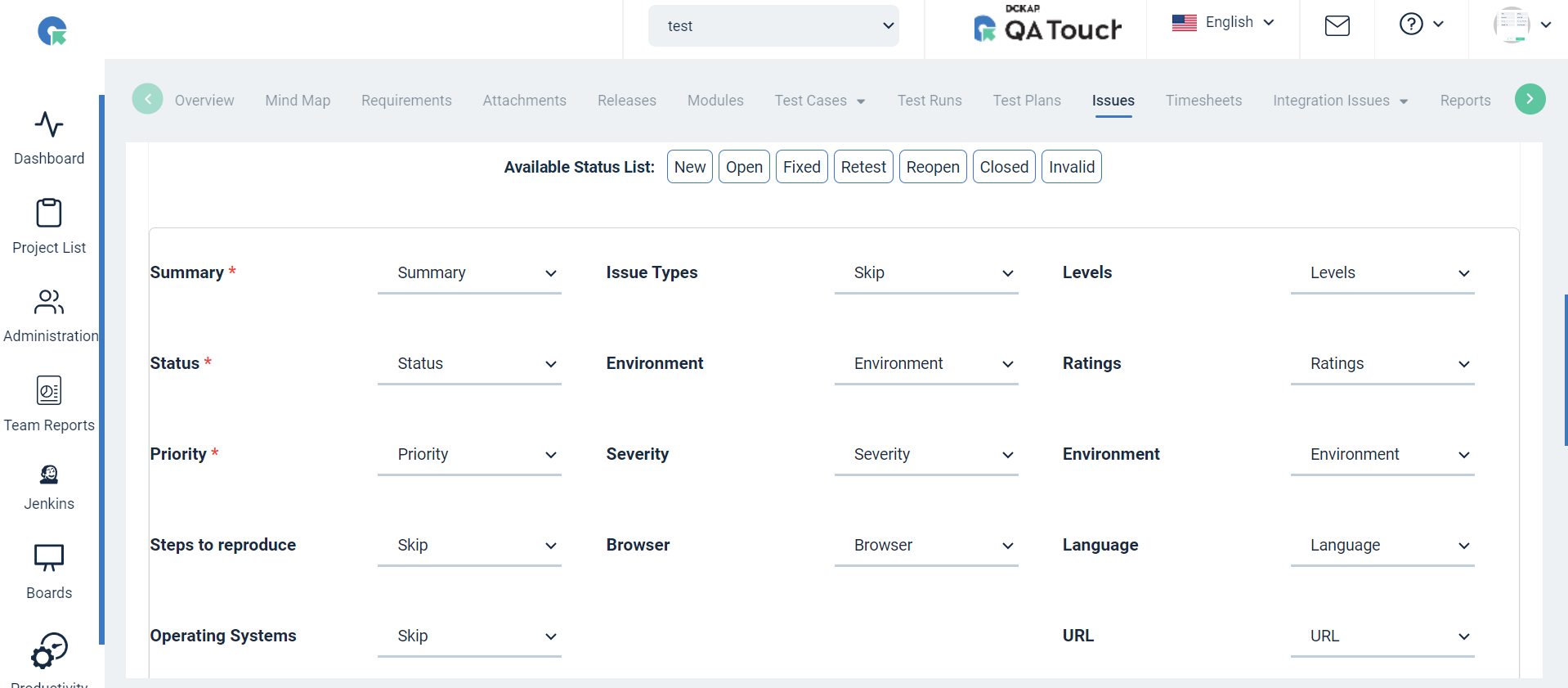
Map all the fields accordingly. Once all boxes are checked, click on the Import button. All issues will be imported successfully.
How to Link Test Cases to an Issue
To link test cases to an issue, click More → Link Test Case on the Issues page, select the module, choose the test cases, and click Save.
- In Issues Page, Click on more->Link Test Case option
- Select the module
- Choose the Test cases to link (Note: you can filter Test cases by tags here)
- Click on Save Button to link selected cases with the Issue
How to Add and Manage Comments on Issues
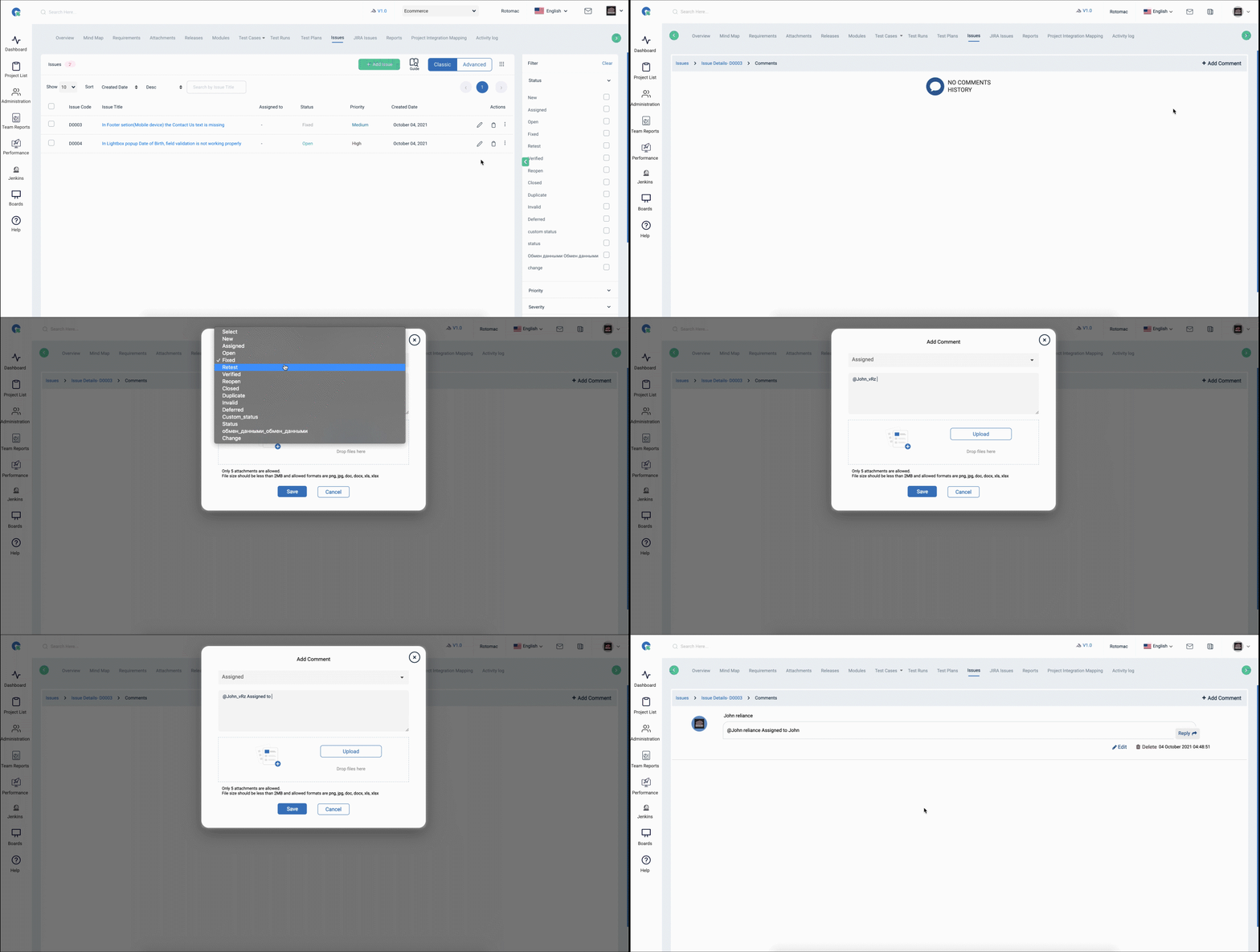
To add a comment, click More → Comments on the Issues page, enter your comment, select the Status and Assigned to user, and click Save.
Add a Comment to an Issue
- In Issues Page, Click on More->Comments
- Enter the comments(You can enter comments with emoji)
- Select Status and Assigned to
- Click on save
How to Add, Edit and Manage Comments in QA Touch Issues Module?
View, Reply to, Edit, or Delete Comments
- In Issue View page, Click on Comments History
- In this page, you can:
- Add a comment
- Reply to a comment
- Edit a comment (Created by you)
- Delete a comment (Created by you)
How to Archive and Delete an Issue
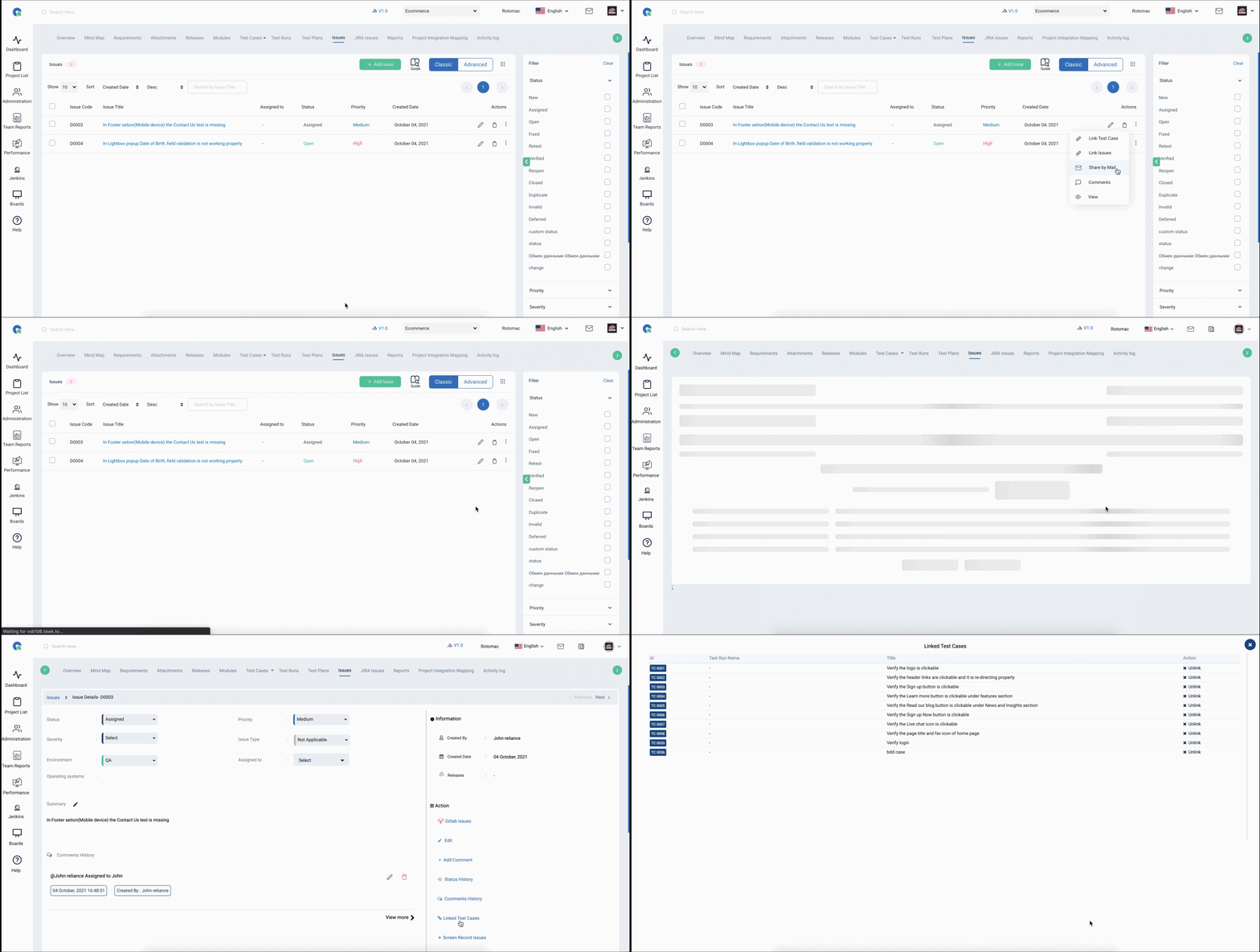
How to View Linked Test Cases and Linked Issues
You can view and manage the test cases and other issues linked to an issue from the More menu on the Issues page.
View Linked Test Cases
- In Issues Page, Click on more->Link Test Case option
- Select the module
- Choose the Test cases to link (Note: you can filter Test cases by tags here)
- Click on Save Button to link selected cases with the Issue
Link and View Linked Issues
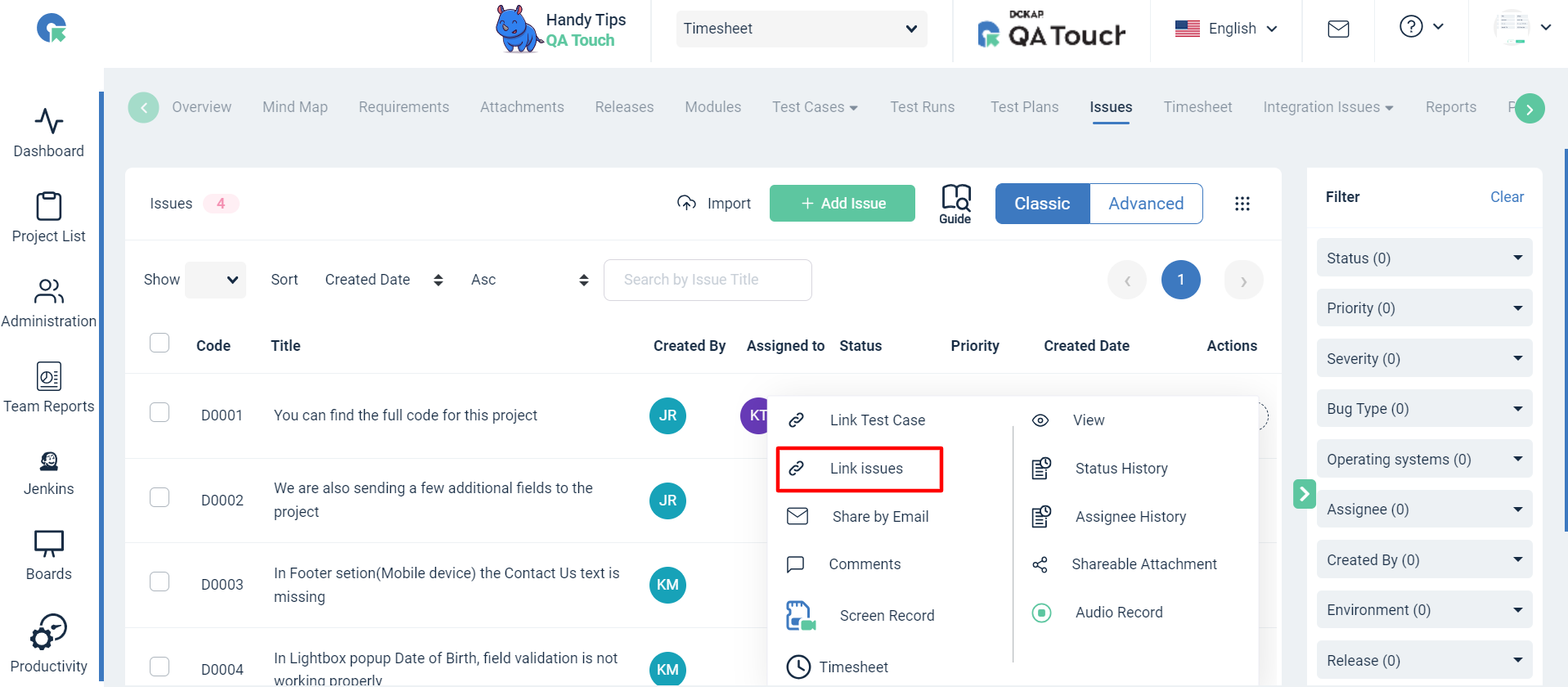
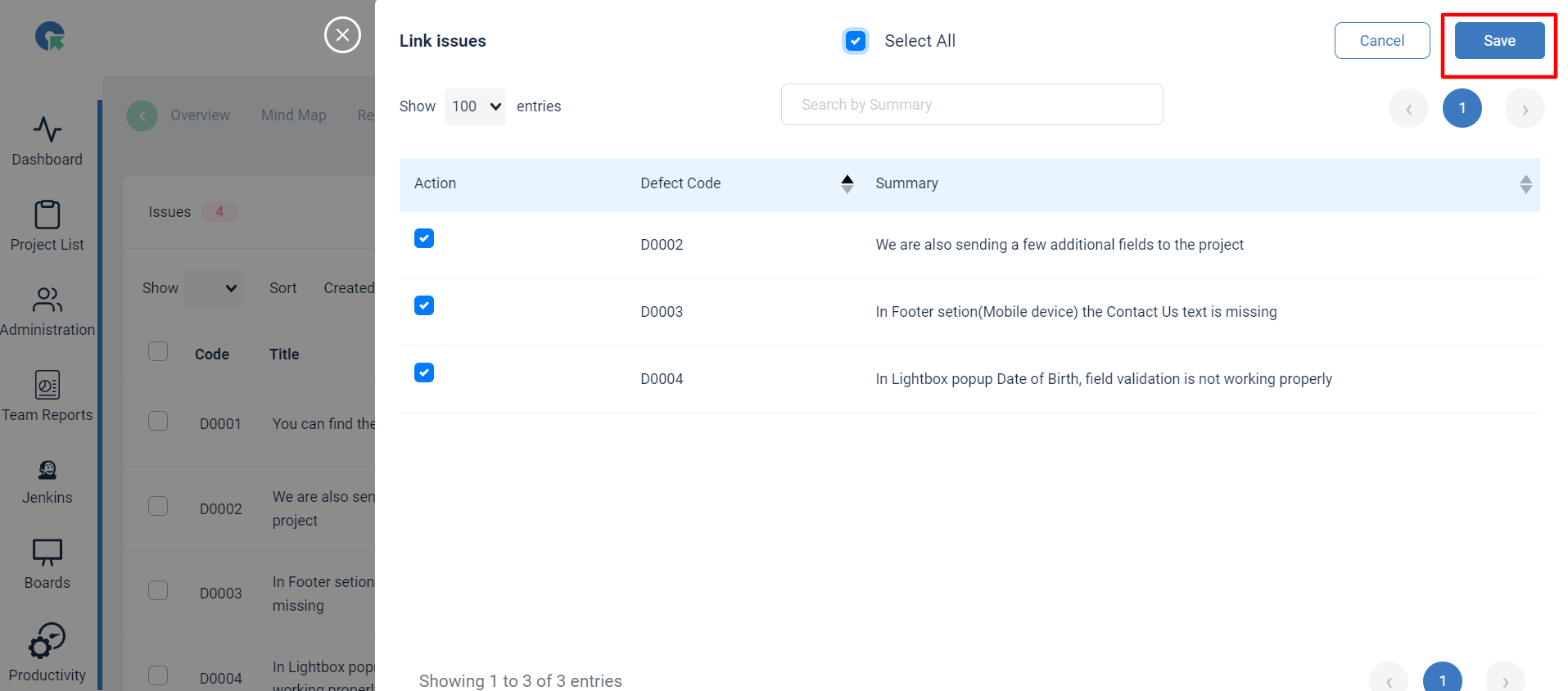
- In Issues Page, Click on more->Link Issues option
- Choose the Issues to link
- Click on Save Button. The selected issues will be linked with the other Issue
How to Share Issues in QA Touch
You can share issues by email or share an individual issue through a public shareable link, both from the issue’s Actions menu.
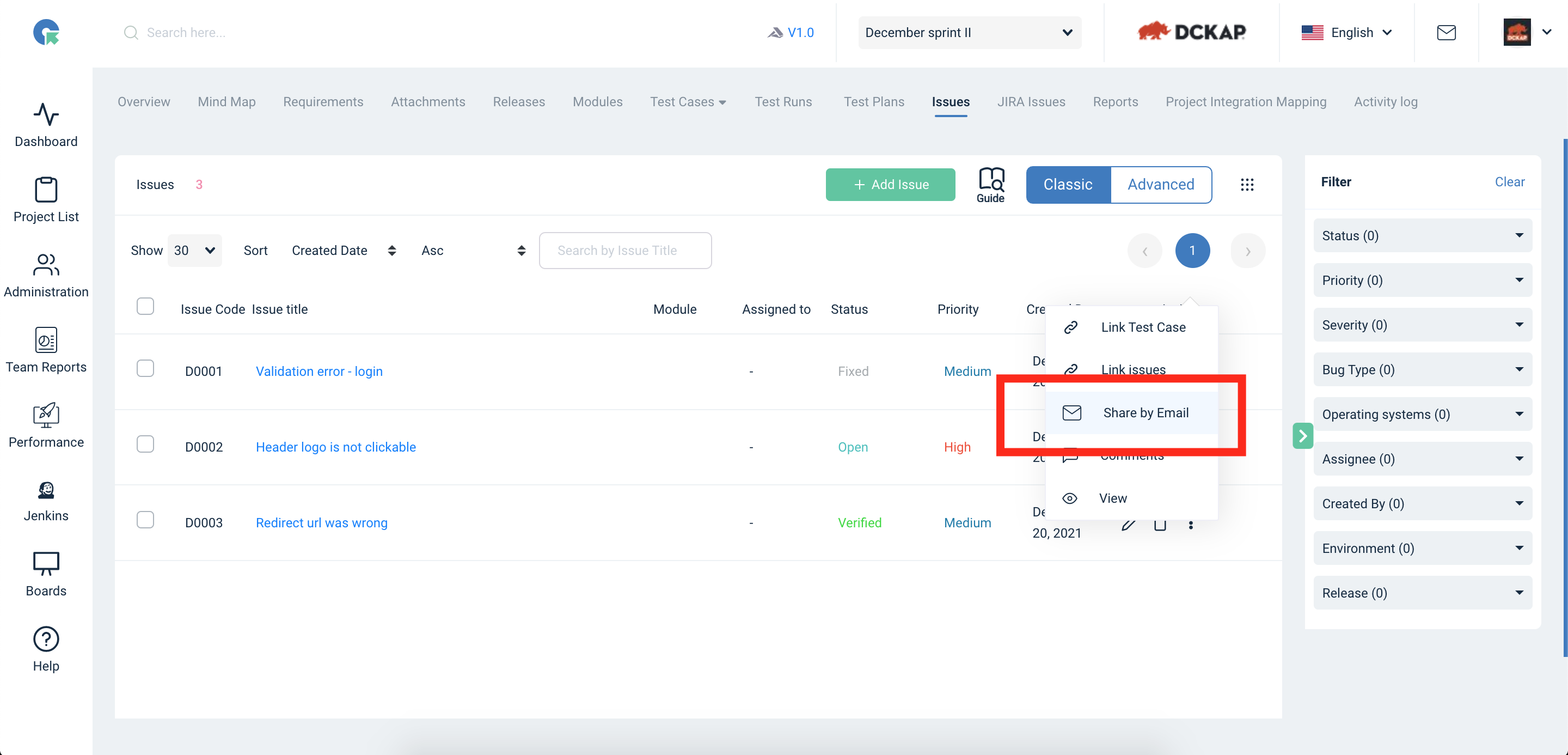
Share an Issue by Email
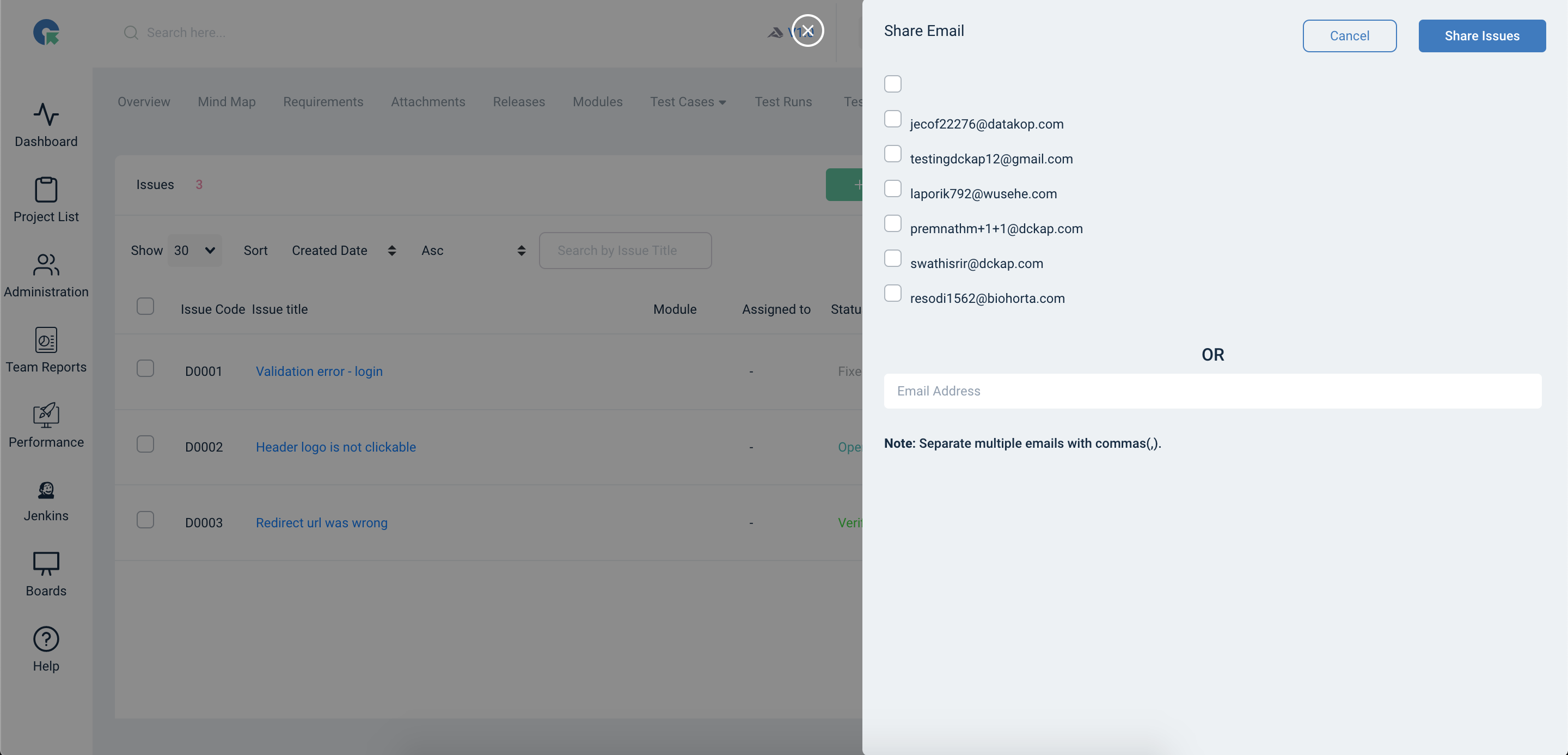
- Issues can be shared by email
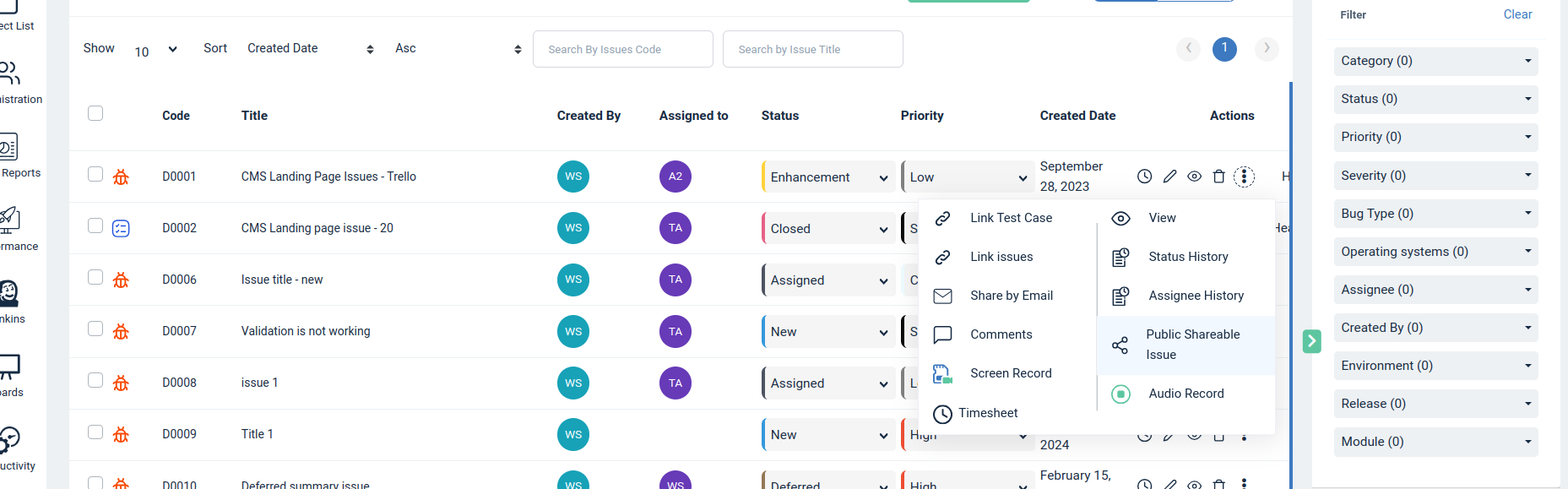
- Click on the 3dots(Actions) near an issue and select share by email
- Select or enter an email id and click share issues.
How to Share an Individual Issue Publicly
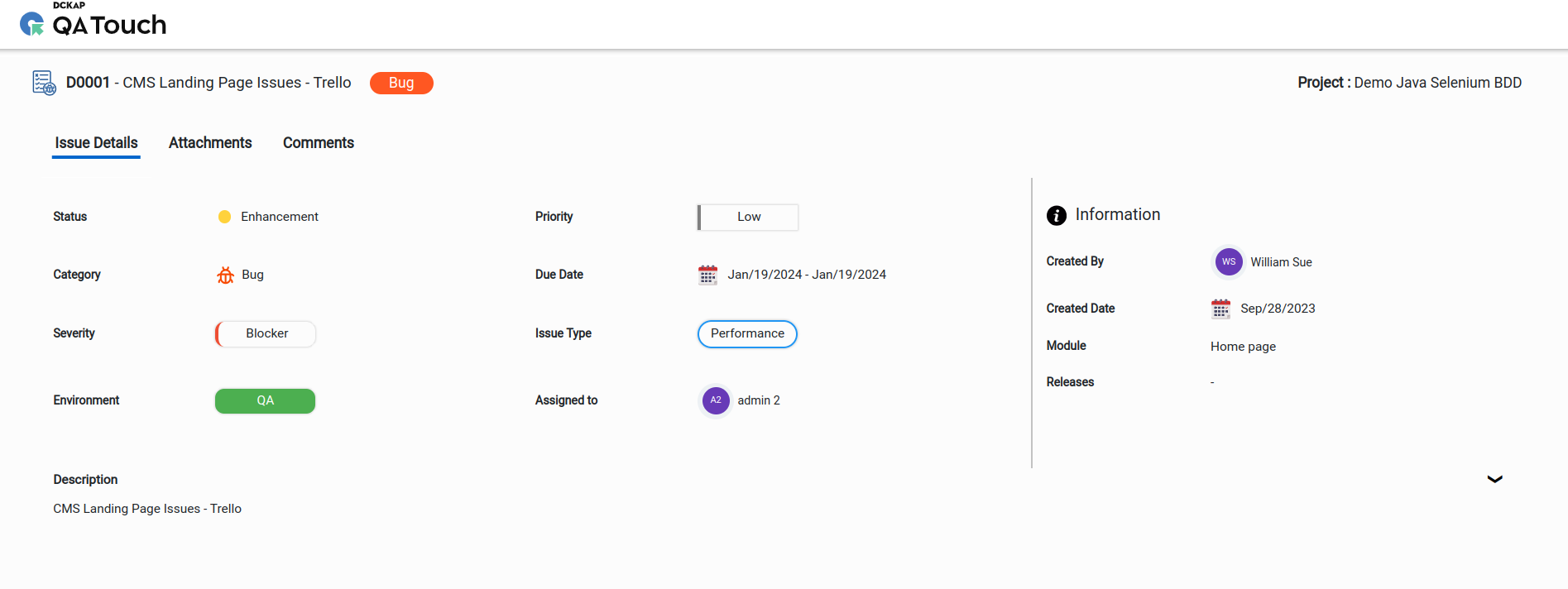
To share the individual issue, click on the action button and select the Public shareable issue option.
How to View Issue Status History and Assignee History
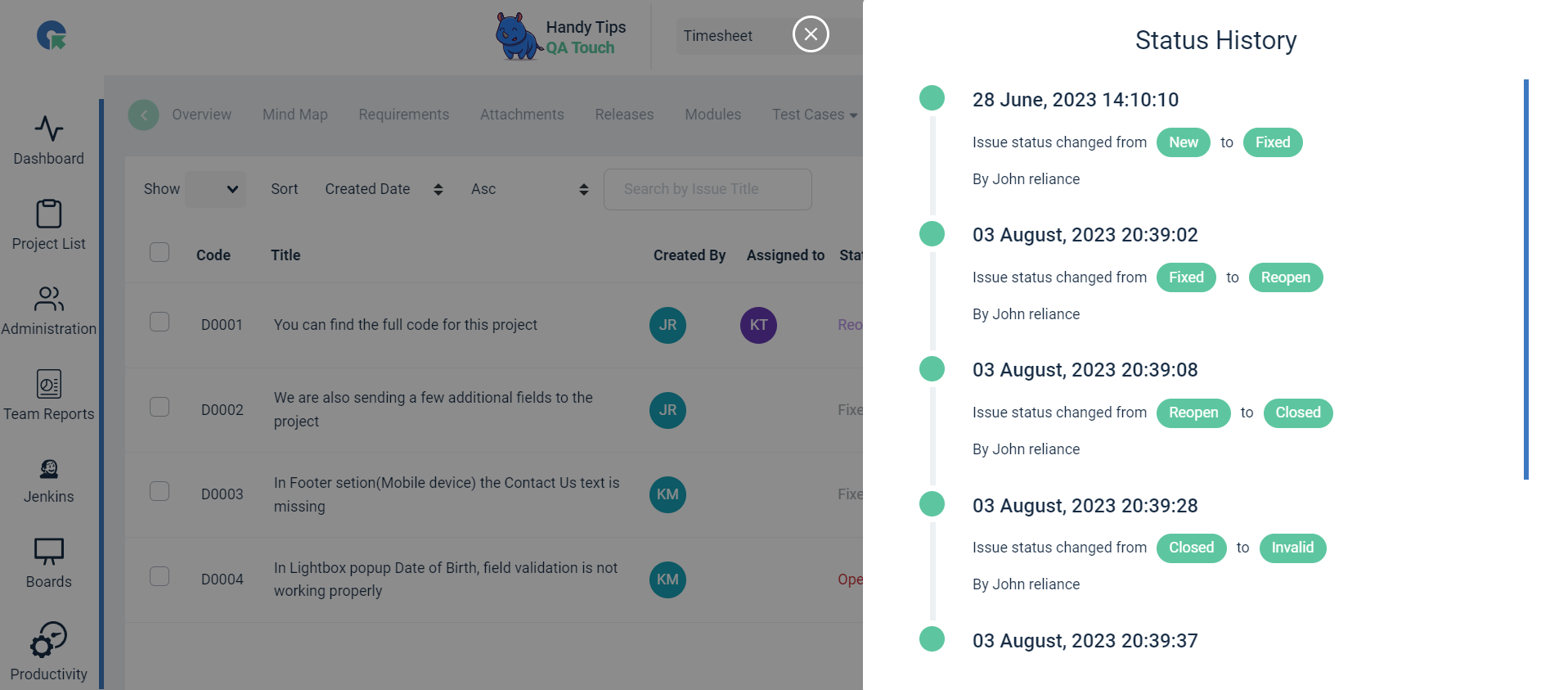
QA Touch keeps a changelog for each issue: Status History shows status transitions, and Assignee History shows every user who has been assigned to the issue.
Issue Status History
Status History can help you to monitor all changelog, including status transitions (when and by whom the status change was made). Click on Status History to view all the issue statuses.
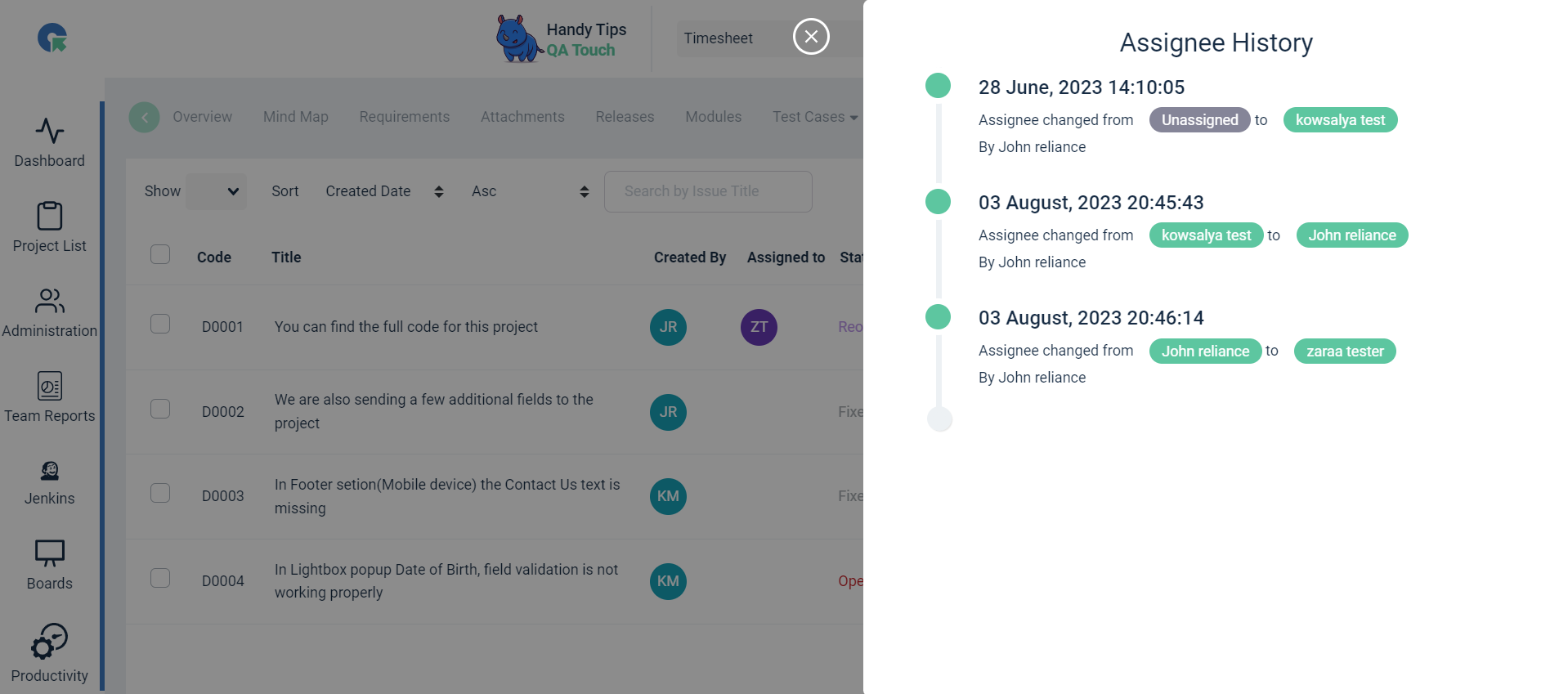
Issue Assignee History
Assignee History shows the history of all the users that have been assigned to the Issue. This makes it easy to detect the changelog of assignees. Click on Assignee History Button to view all history of assignees.
How to Bulk Update Custom Fields in Issues
Bulk Custom Field Update in Issues allows you to make major changes to your custom field data without making the updates one by one. This saves time and updates all the custom fields in one shot.
Before performing the custom field bulk action, you have to create the custom fields for the issues. When you click “Custom Field”, a pop up will show all the custom fields currently on your project. Follow the below steps to perform the bulk custom field action in Issues:
- Go to the Issue page Select issue you want to update the custom field.
- Click on Custom field option
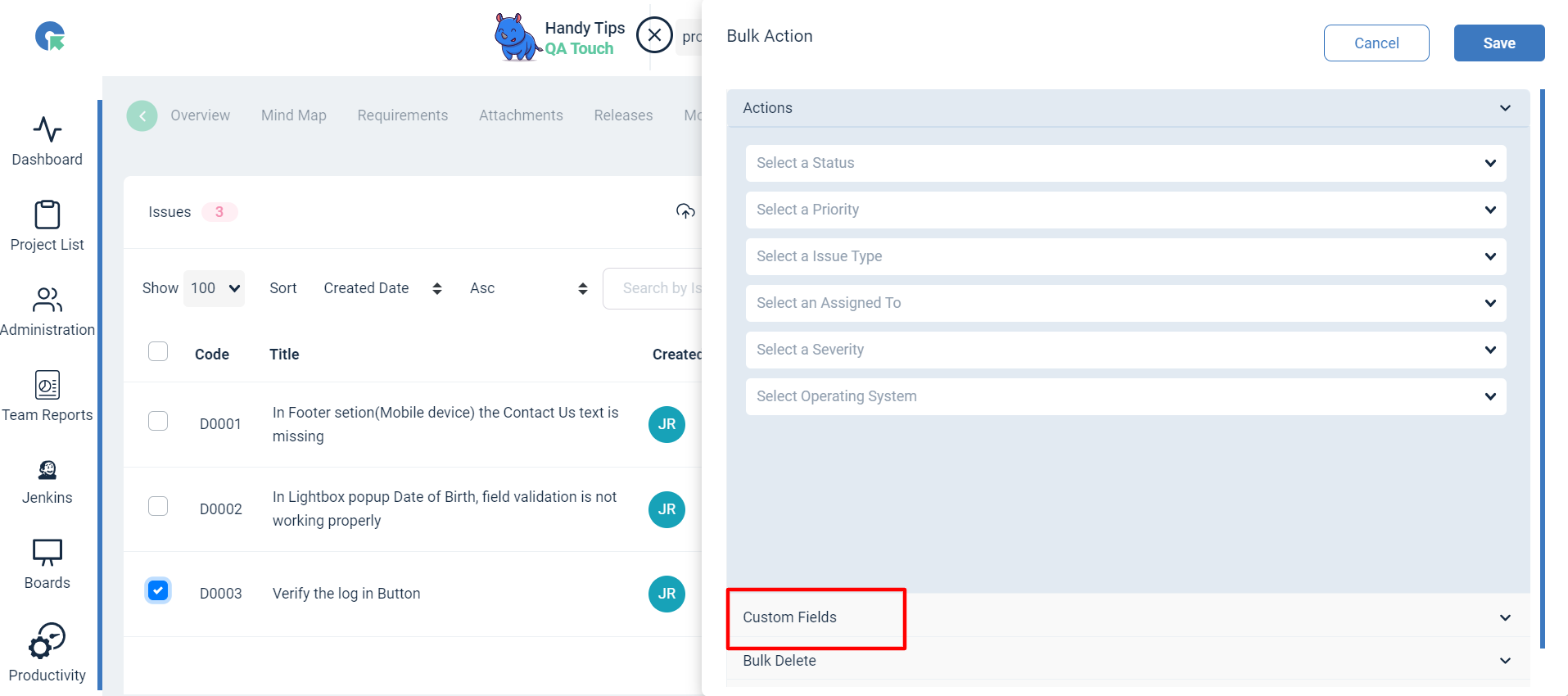
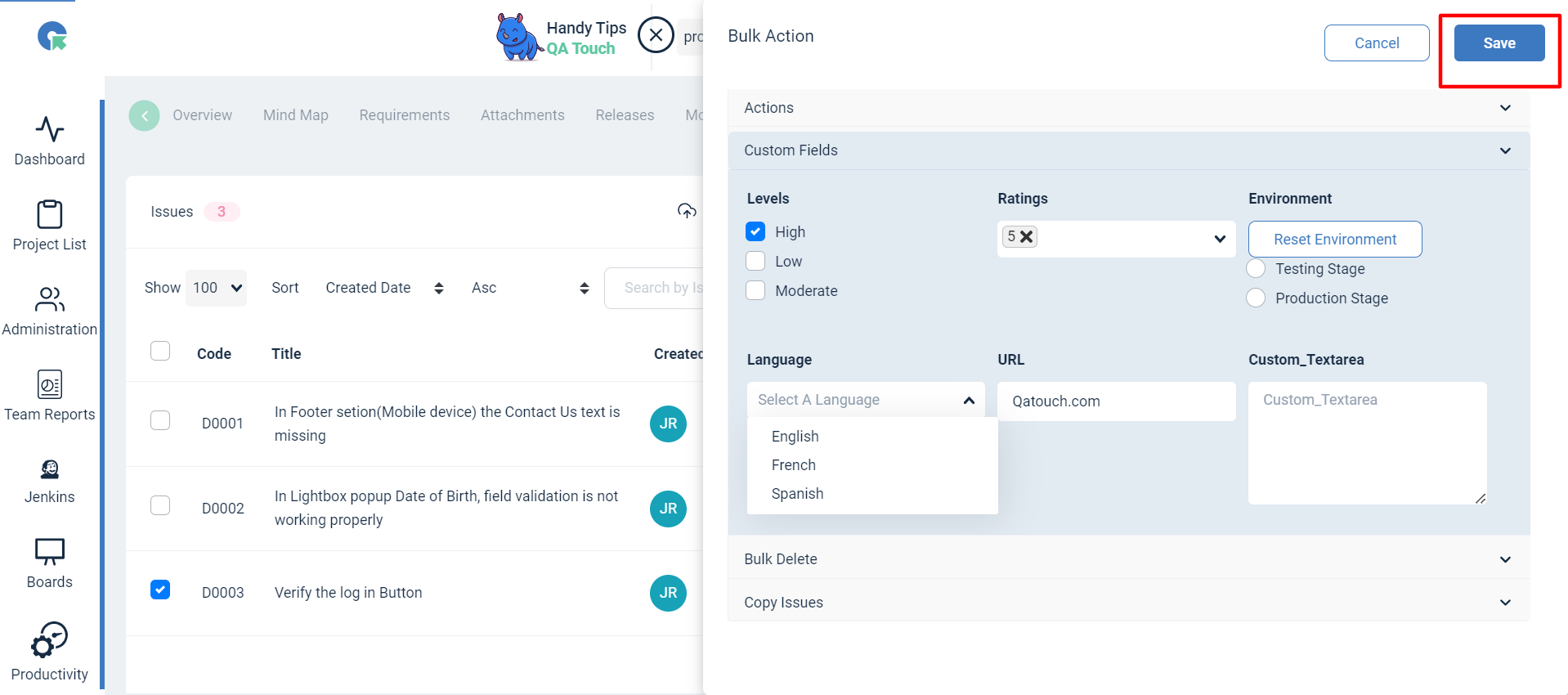
- Choose the custom field from the dropdown → add your field value.
- After Updating all the custom values, Click on Save button
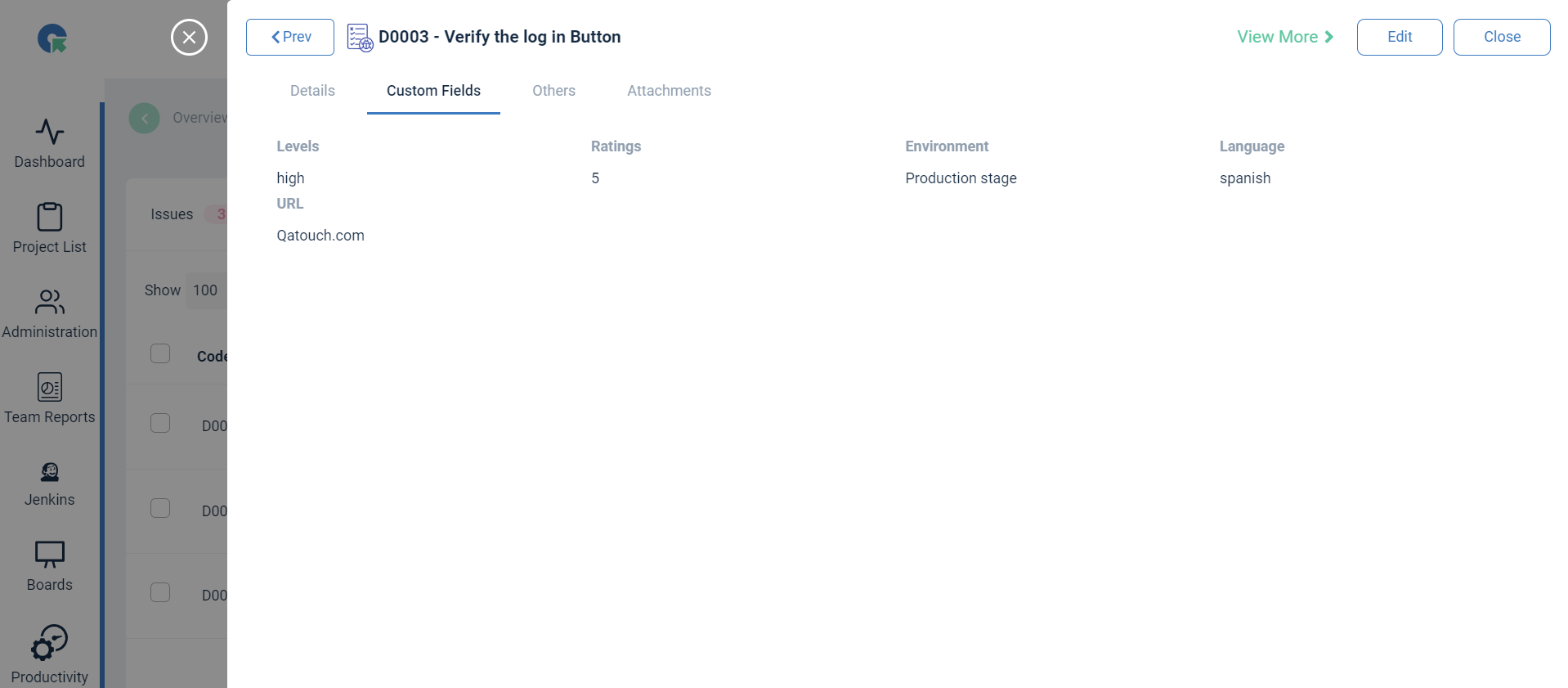
After performing the bulk custom field action, click on view and verify all the updated custom values are showing properly.
How to Export Issues from QA Touch
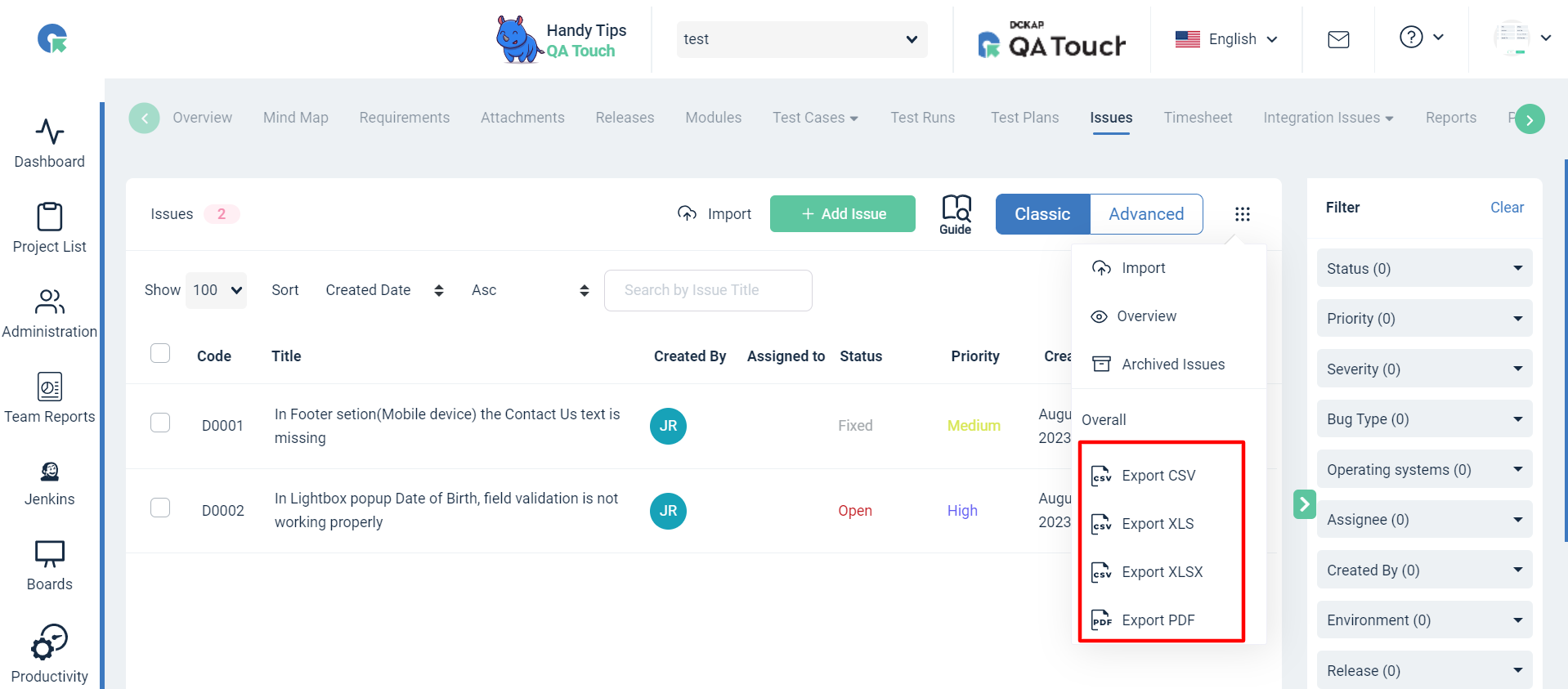
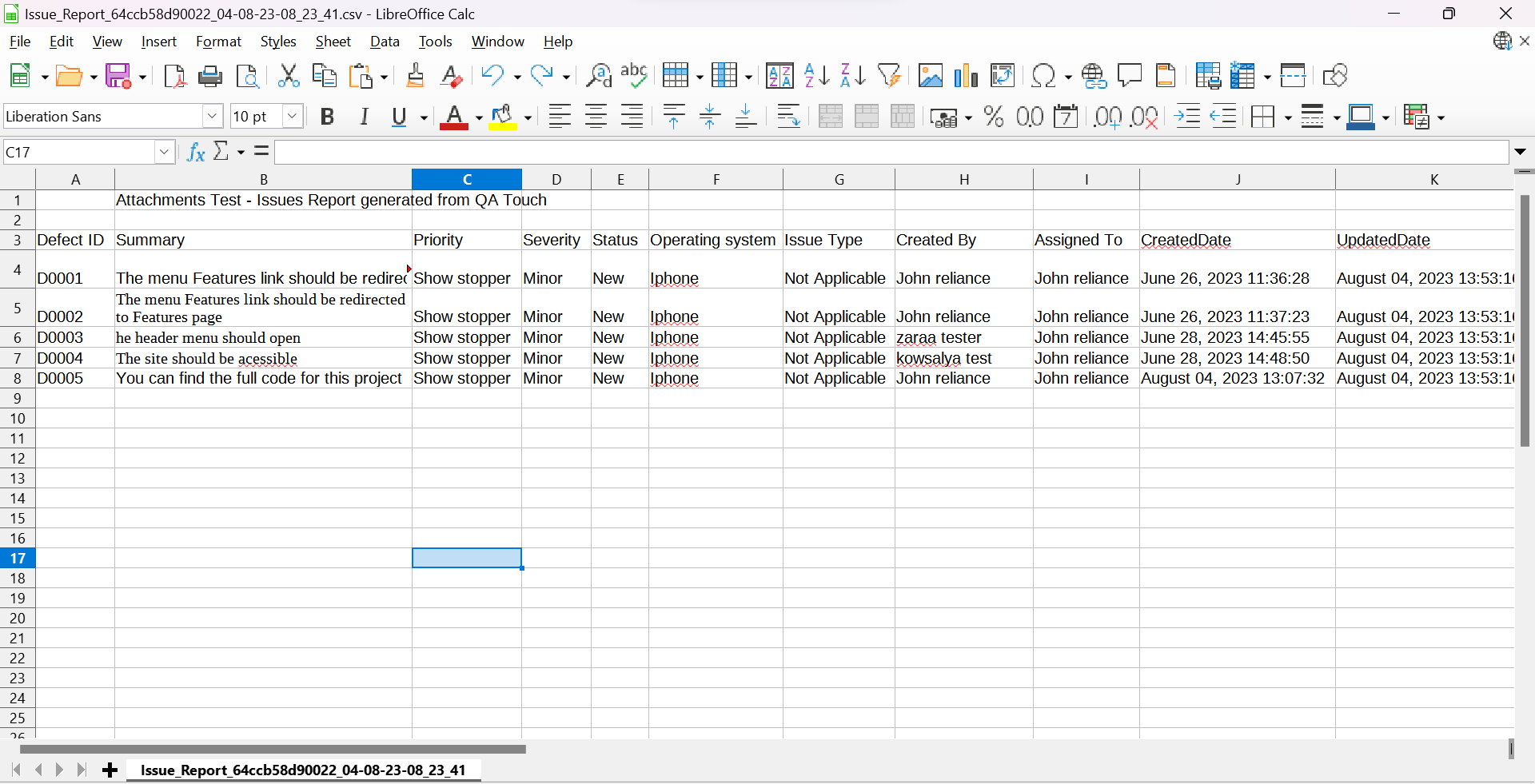
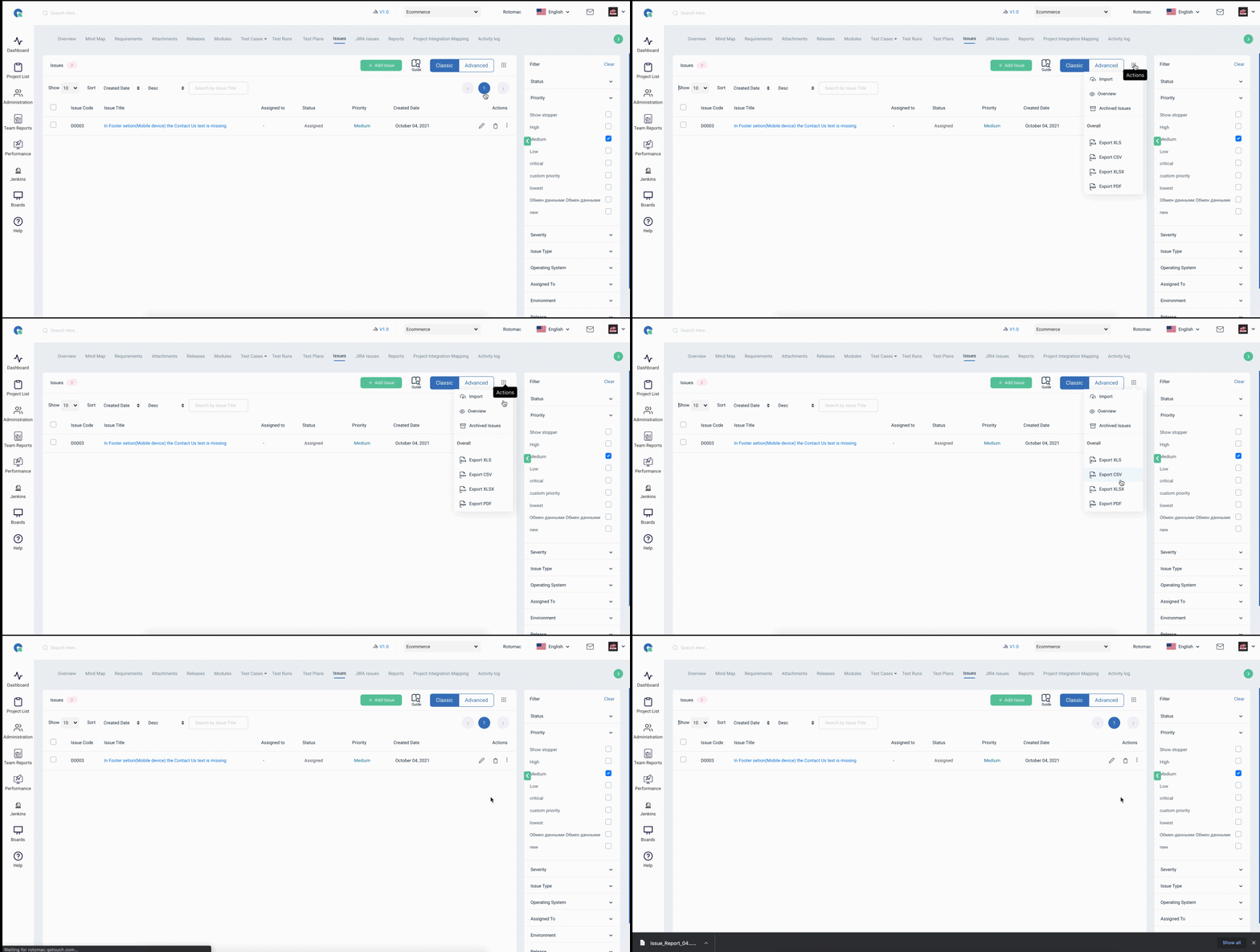
To export issues, open the Issues list page, click the Export menu, and choose CSV, XLS, XLSX, or PDF.
- Login To QA Touch
- Go To Issues list page
- Click on the Export menu
- Click on any format (CSV,XLS,XLSX,PDF) in the Export dropdown.
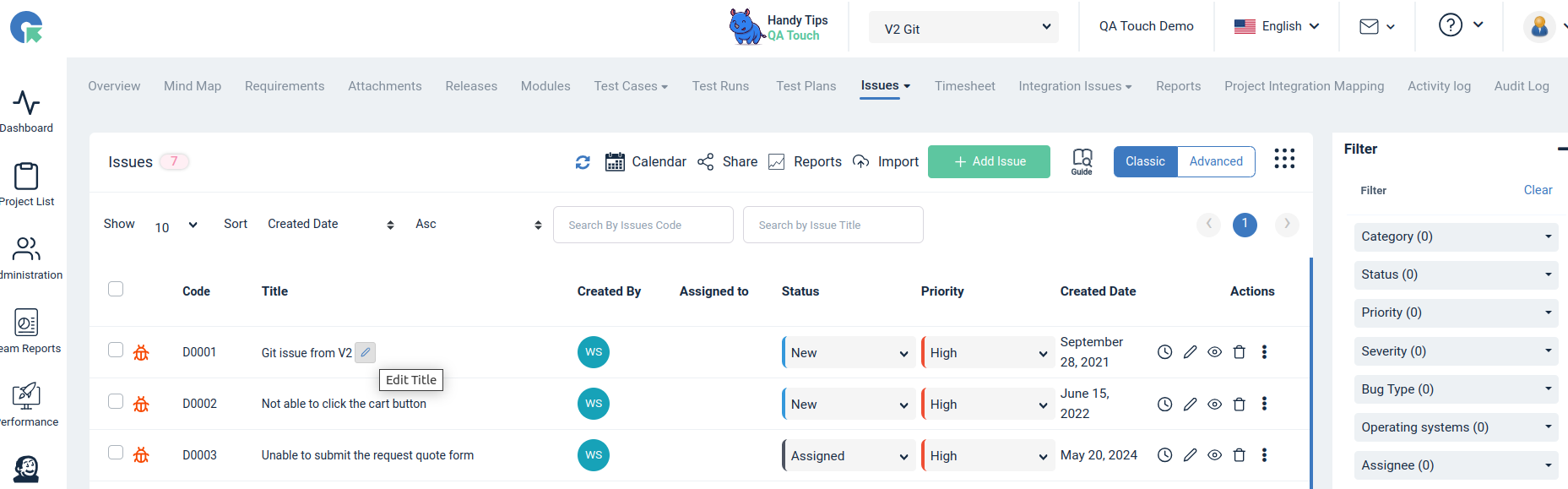
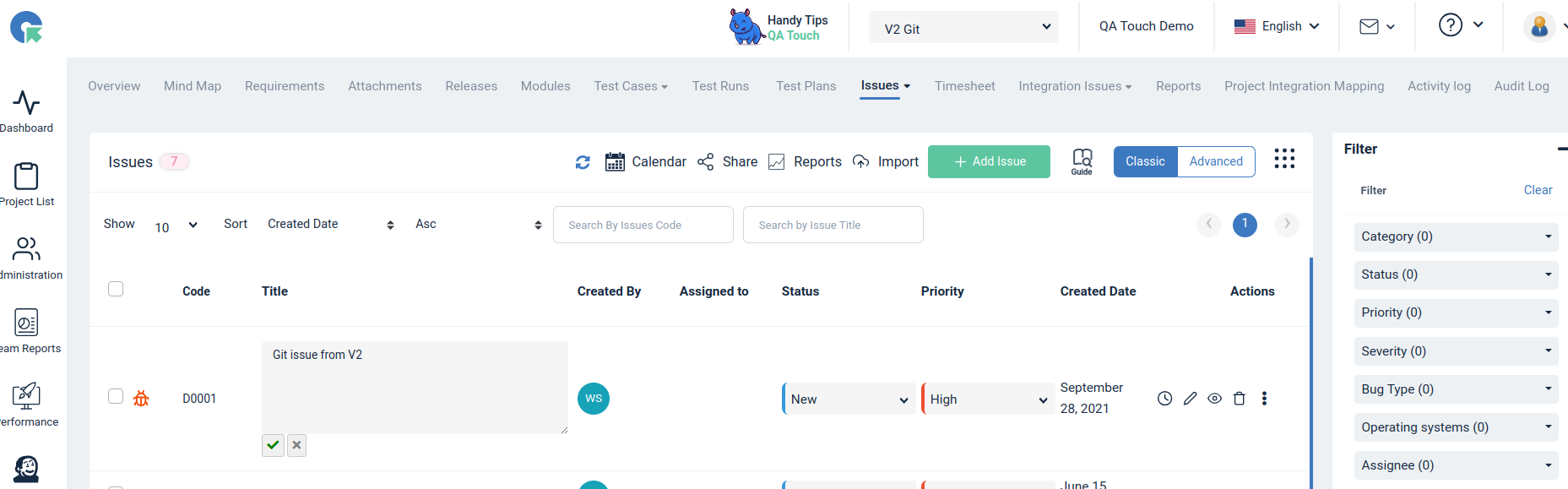
How to Inline Edit an Issue Title
The Inline Edit feature allows you to quickly and easily make changes to the Title directly without navigating to a separate edit page.
Other Issue List Options: Filter, Overview, and Export
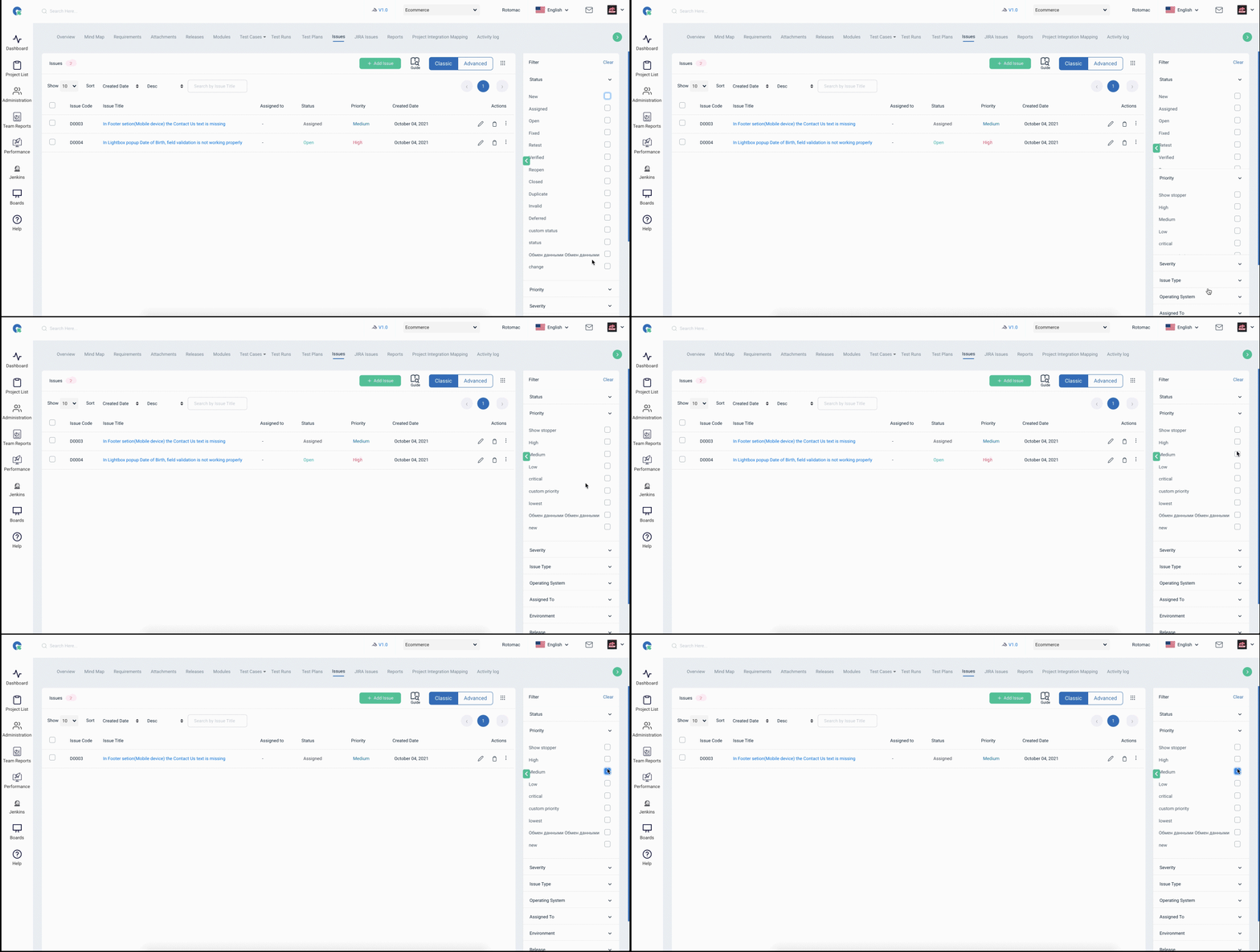
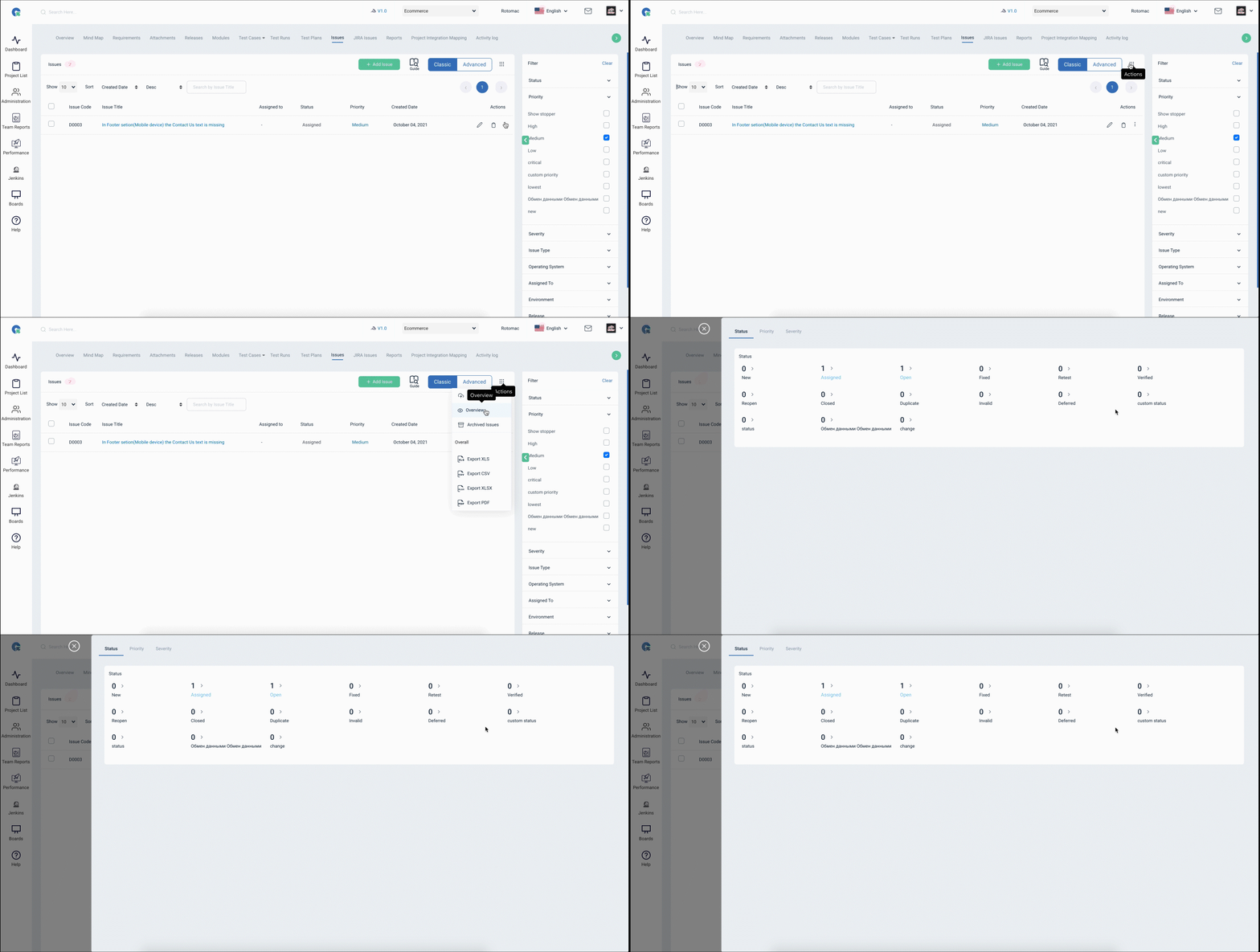
The Issues list page also includes Filter, Overview, and Export buttons.
- Filter: Click on this button to filter Issues based on (Module, Priority, Severity, Issue type, Assigned user)
- Overview: Click on this button to view Issue Stats (Number of Issues based on Status, Priority, Severity)
- Export: Click on Export to export all the Issue in several Formats(CSV, XLS, XLSX, PDF)
What Is the Closed Issues Tab?
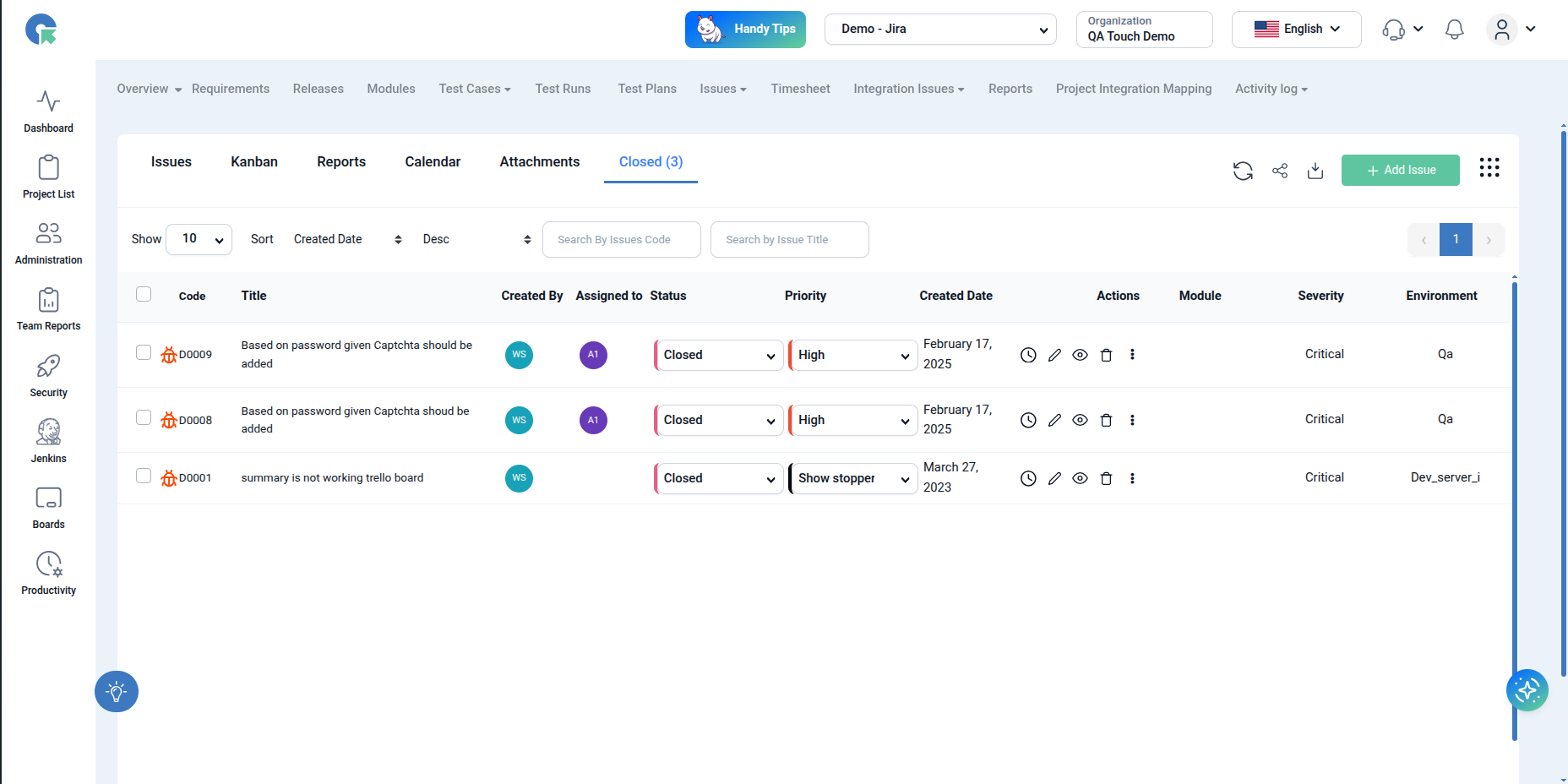
The Closed tab in the Issues module displays all issues that have been marked as resolved or completed. This view helps teams track completed work and review previously reported issues.
View Closed Issues
- Lists all issues with status set to Closed
- Includes details like:
- Issue Code
- Title
- Assigned User
- Priority
- Severity
- Environment
- Created Date
Frequently Asked Questions
Does QA Touch have a built-in issue tracker?
Yes. QA Touch has an in-built Issue Tracker that lets you add independent issues or add issues on the fly from a test run, link issues two ways with test case results, and track linked issues with reports.
How do I add custom fields to issues?
Go to Administration > Custom Fields, click add field, select Issue as the module type, choose a specific project or all projects, enter the label name and options, and click Save.
Which file formats can I use to import issues?
You can import issues from CSV, XLS, or XLSX files. Only issues with a valid status, priority, severity, environment, and issue type are imported.
Which fields are mandatory when importing issues with custom fields?
The Summary, Status, and Priority fields are mandatory when mapping fields for an issue custom fields import.
How do I link test cases to an issue?
On the Issues page, click More → Link Test Case, select the module, choose the test cases (you can filter by tags), and click Save.
Can I share an issue outside QA Touch?
Yes. You can share issues by email from the Actions menu, or select the Public shareable issue option to share an individual issue.
Can I see who changed an issue’s status or assignee?
Yes. Status History shows status transitions, including when and by whom they were made, and Assignee History shows all users who have been assigned to the issue.
Which formats can I export issues in?
You can export issues in CSV, XLS, XLSX, or PDF format from the Export menu on the Issues list page.