How to Integrate Playwright with QA Touch
What Is PlayWright?
Playwright is an open-source automation tool developed by Microsoft that allows developers to automate the testing of web applications across different browsers (such as Chromium, WebKit, and Firefox) and platforms (including Windows, macOS, and Linux). Playwright enables developers to write reliable and maintainable tests for web applications by automating user interactions such as clicking buttons, filling forms, navigating pages, and validating UI elements.
What’s New in Playwright Integration 2.0?
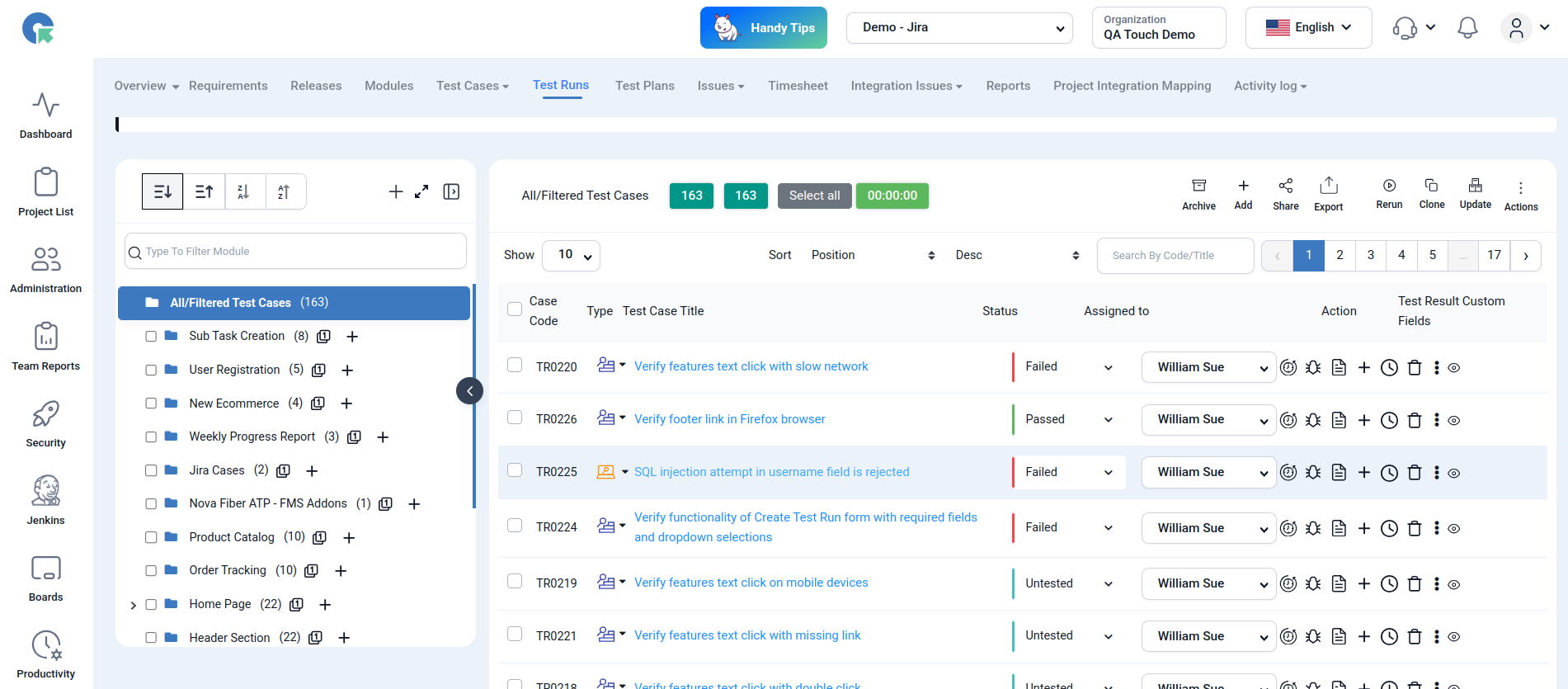
1) Browser Different Results Tracking
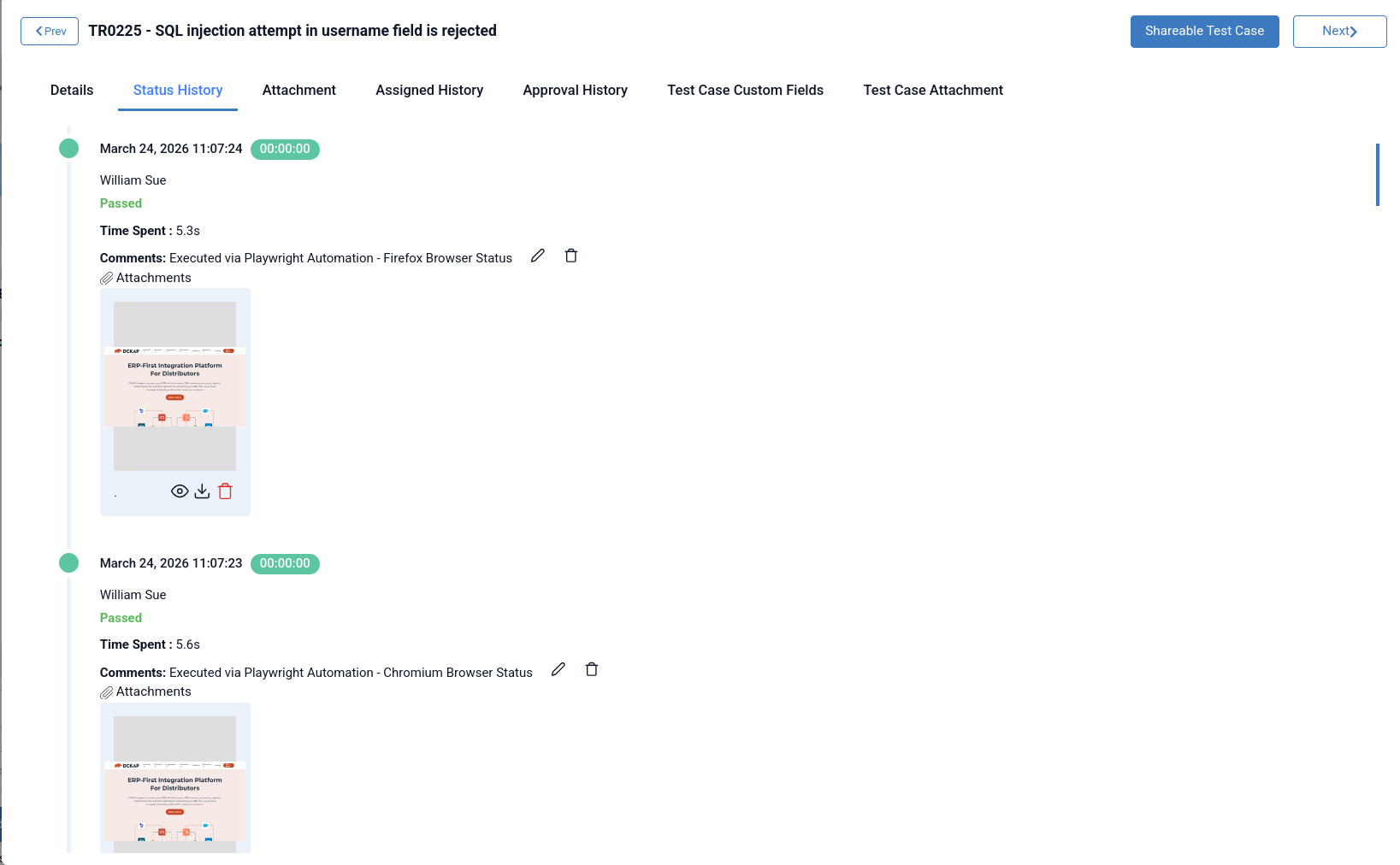
Captures allows for the quick identification of browser-specific problems and the assurance of consistent cross-browser functionality by capturing and displaying test execution results independently for each browser, making it simple to compare pass/fail status, errors, and behaviour differences.
Run a single test case across:
- Chromium (Chrome)
- WebKit (Safari engine)
- Firefox
2) Automatic Screenshot Capture
Playwright generated screenshots to the respective test cases in QA Touch, helping teams quickly debug failures with complete visual and execution evidence. Visual proof for failures Faster root cause analysis. Improved collaboration between QA & Dev teams
3) Time Spent Tracking
Records the execution time of each test case across different browsers, providing insights into performance variations, helping identify slow-running tests, and supporting optimization of overall test execution efficiency.
Prerequisites
Before getting started, ensure you have:
- Node.js 18+
- QA Touch account with API access
- Playwright installed
Step-by-Step Setup (Playwright Integration 2.0)
Step 1: Install Playwright
npm init playwright@latestAfter complete the playwright installation and run the
npx playwright testStep 2: Install QA Touch Reporter
npm i playwright-qatouch-reporter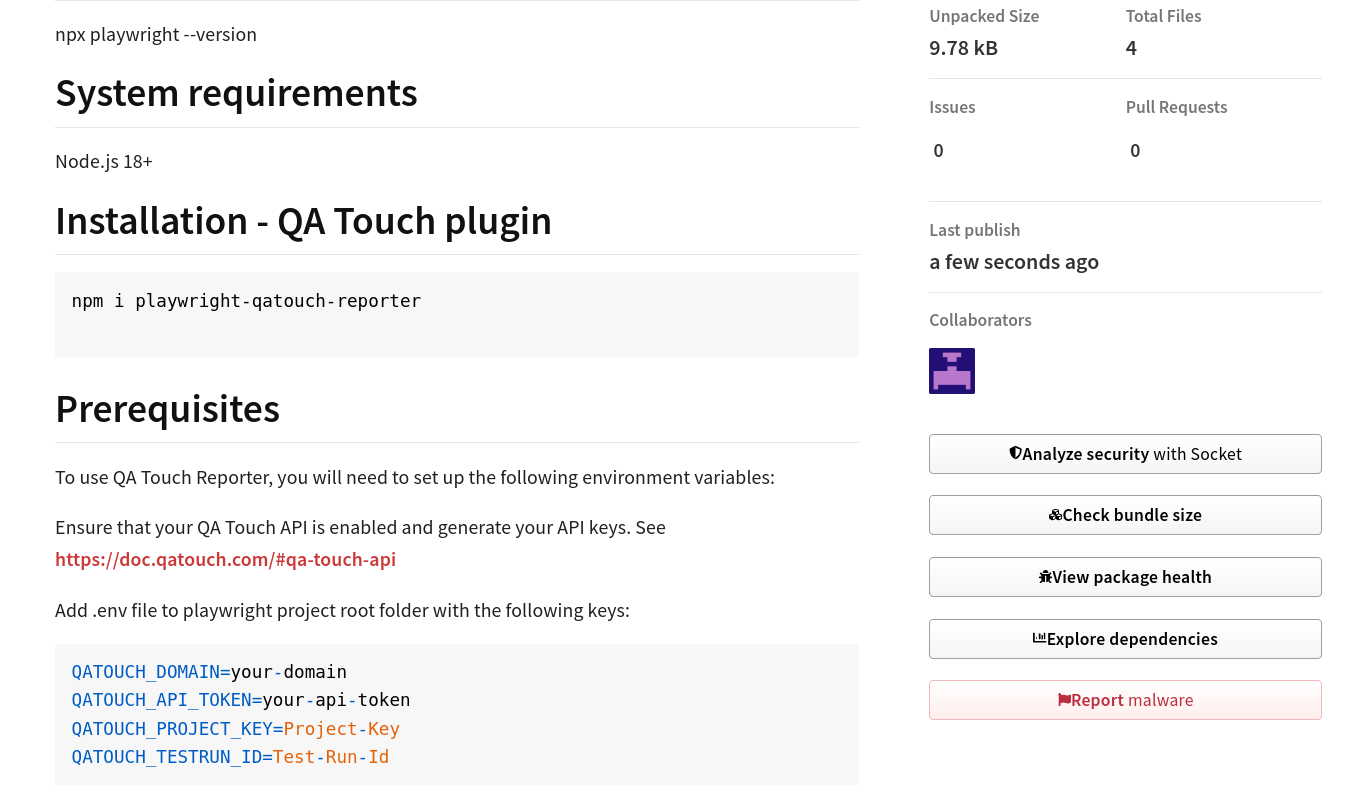
Step 3: Generate QA Touch API Key
- Login to QA Touch
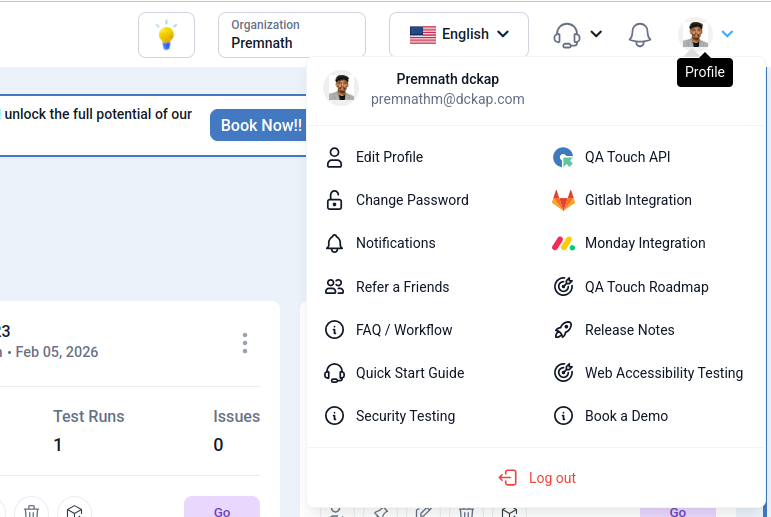
- Go to My Profile
- Generate API Token
- You can refer QA Touch API from https://doc.qatouch.com/#qa-touch-api
- Access the Package URL https://www.npmjs.com/package/playwright-qatouch-reporter
- Install the package in Playwright root directory by executing the below command from your automation environment from the command line.
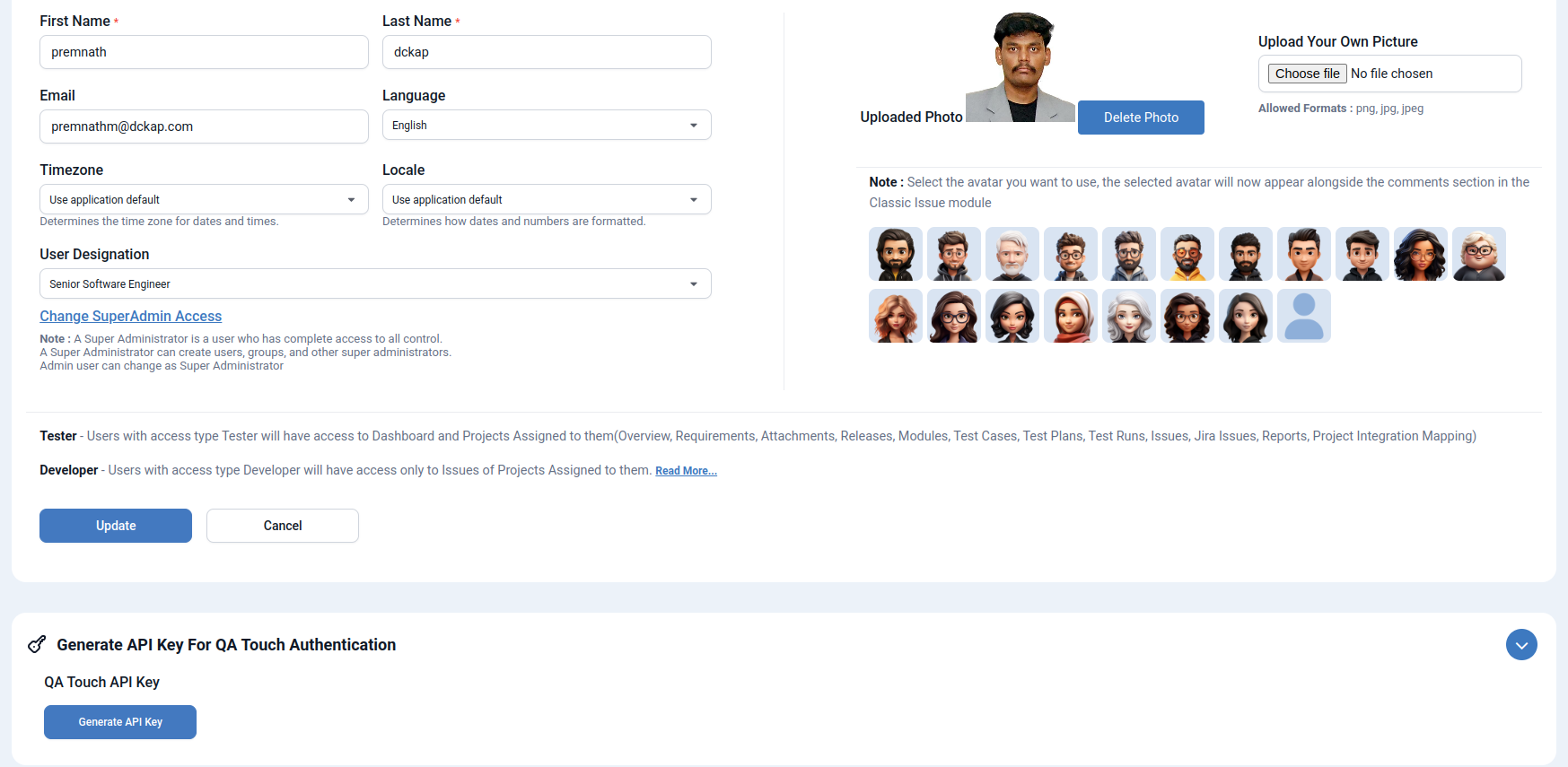

Generate API Key
To use QA Touch Reporter, you will need to set up the following environment variables:
Ensure that your QA Touch API is enabled and generate your API keys. See https://doc.qatouch.com/#qa-touch-api
Step 4: Configure Environment Variables
Create a .env file in your Playwright root directory:
QATOUCH_DOMAIN=your-domain
QATOUCH_API_TOKEN=your-api-token
QATOUCH_PROJECT_KEY=your-project-key
QATOUCH_TESTRUN_ID=your-test-run-id
Step 5: Update Playwright Config
Modify your playwright.config.js:
reporter: [
["html"],
["playwright-qatouch-reporter"]
],
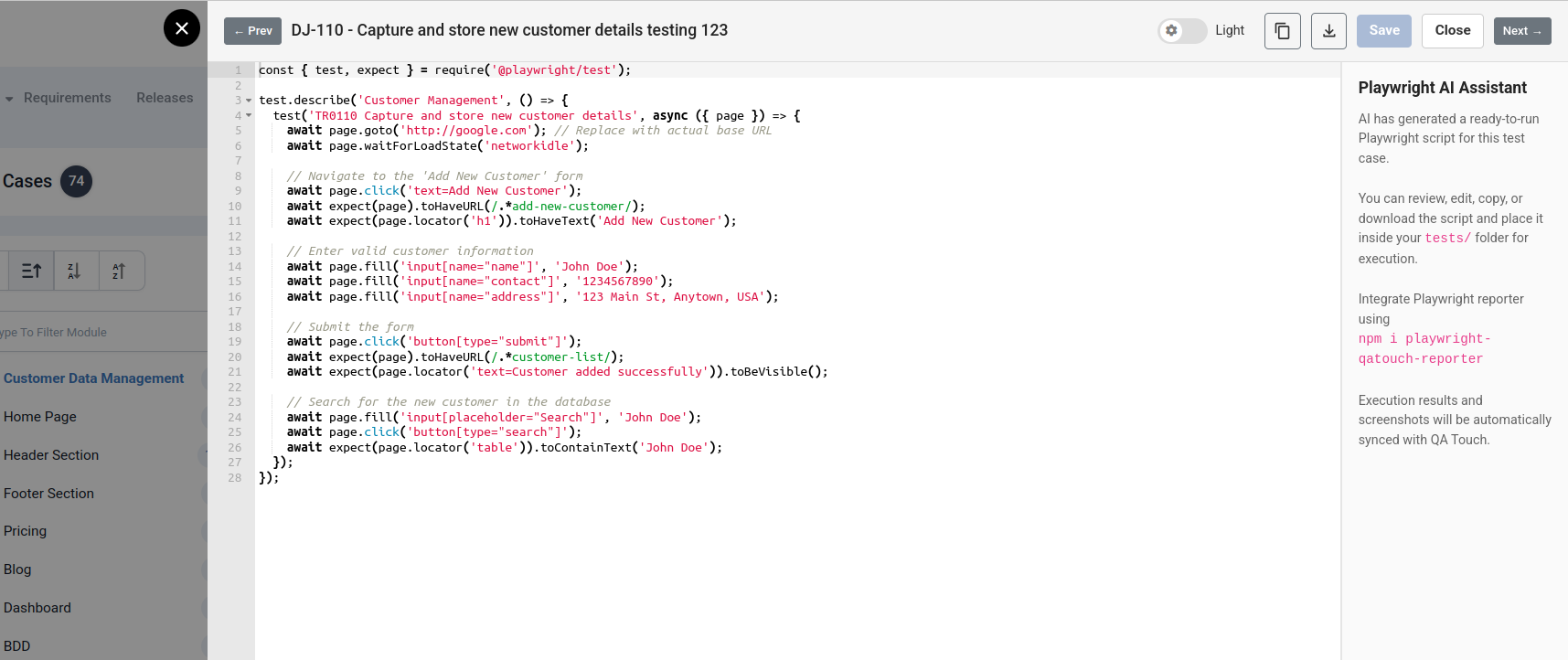
Step 6: Generating Playwright Script Using AI Assistant
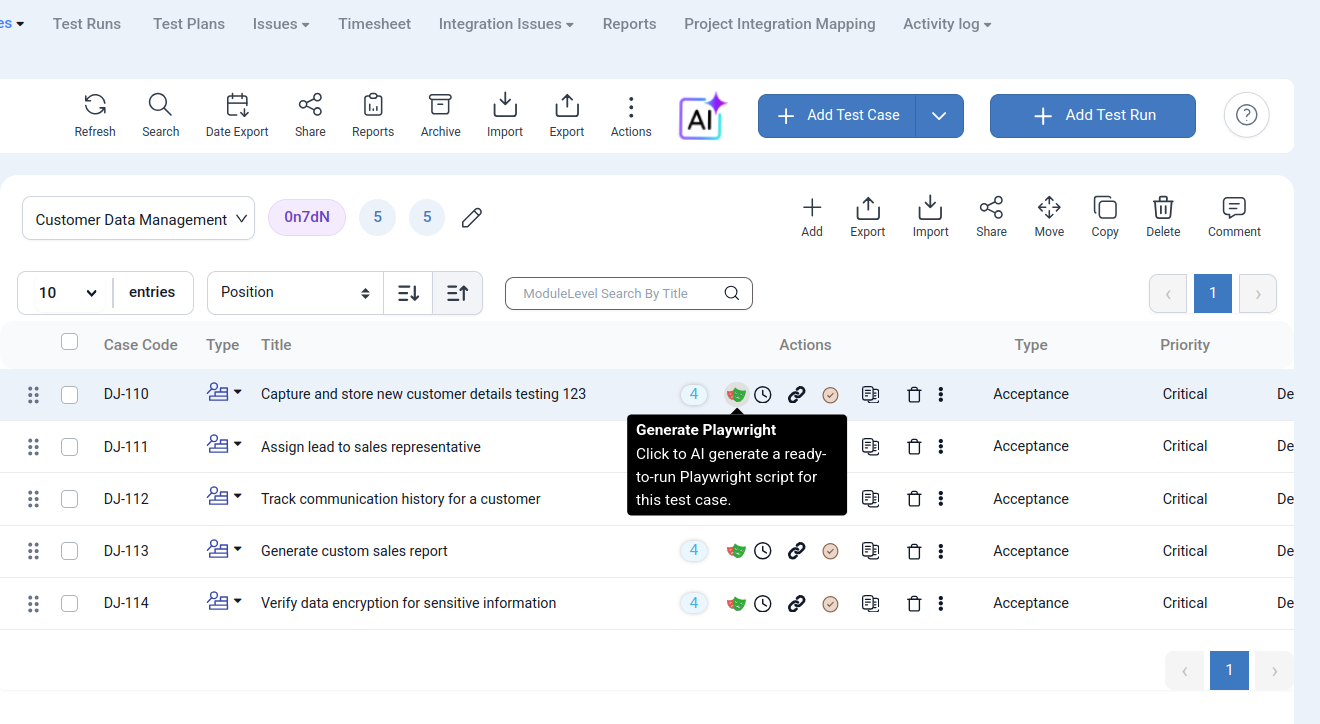
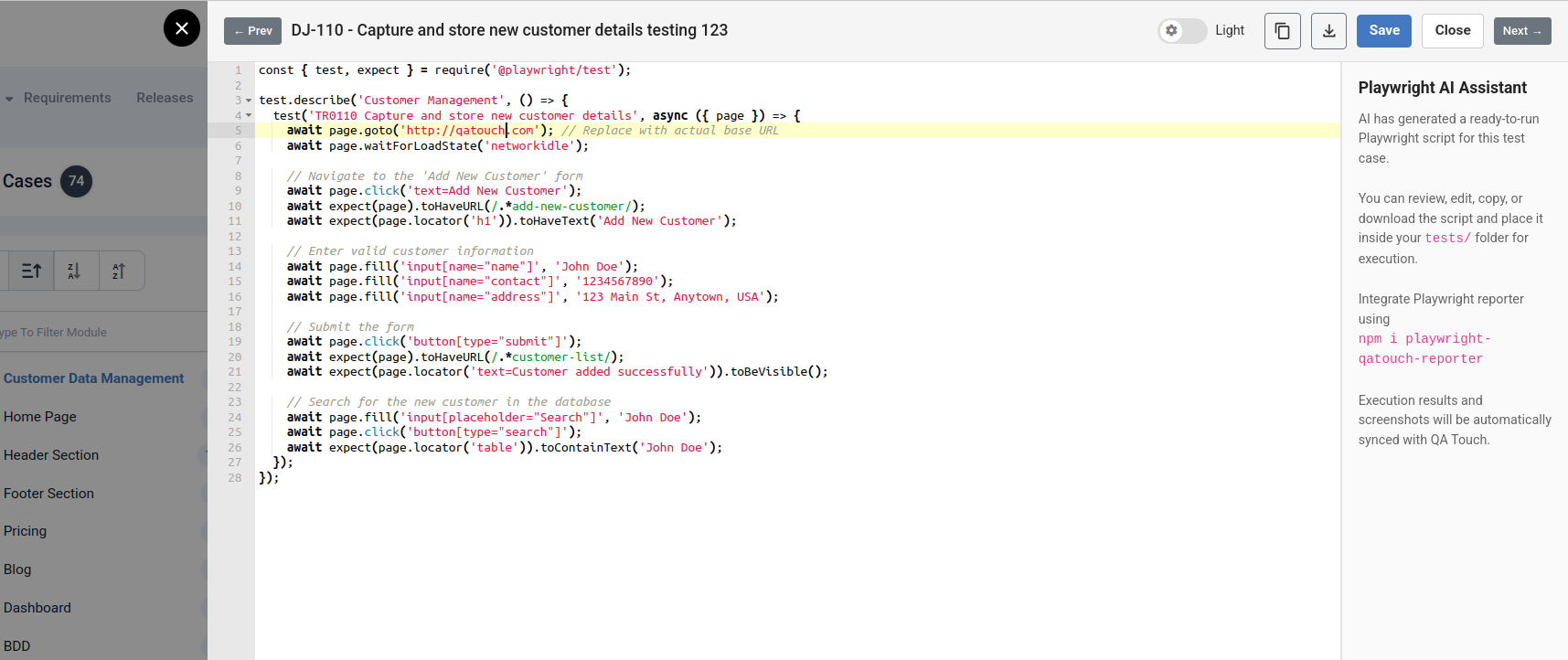
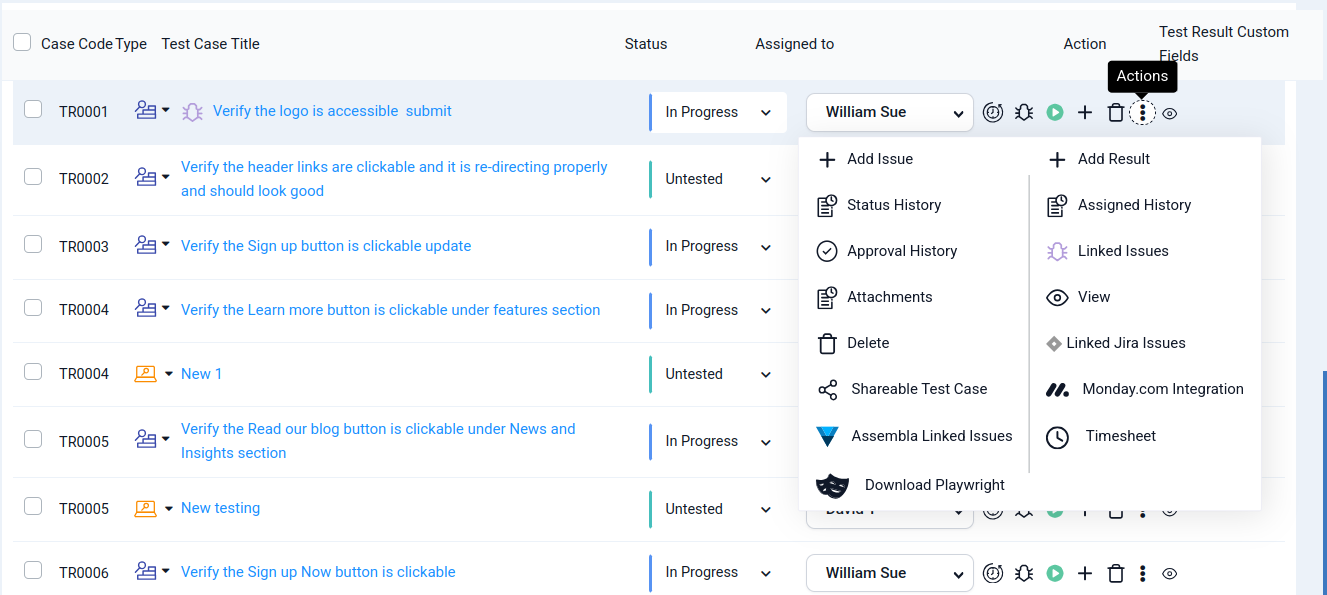
Click the Playwright icon on the Test Case List page to automatically generate automation scripts using QA Touch’s built-in AI-powered Playwright Assistant..
The AI Assistant intelligently analyzes your test case details, including:
- Test Case Title
- Description
- Preconditions
- References
- Test Steps
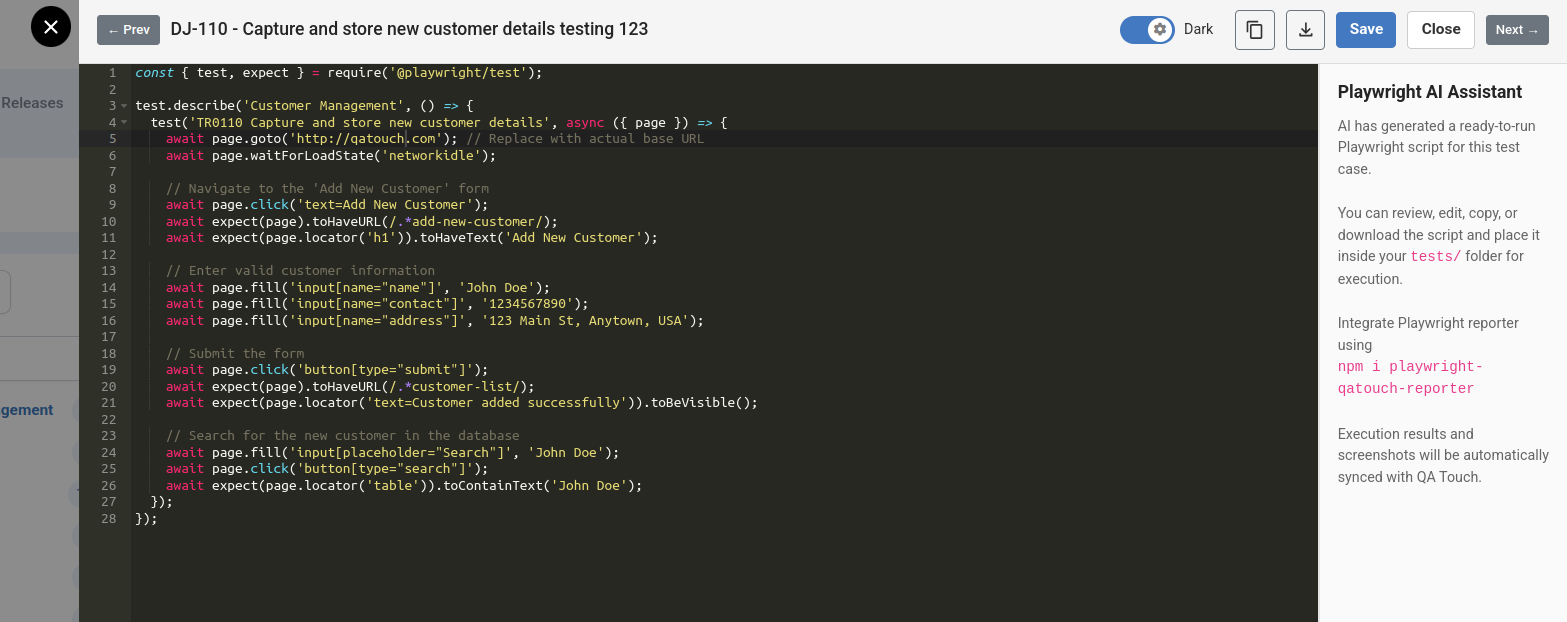
Using this information, it creates a complete, ready-to-run Playwright automation script tailored specifically to your test case.
Once the script is generated, you can:
- Review the code directly in the editor
- Edit or customize it based on your project needs
- Copy the script for quick use
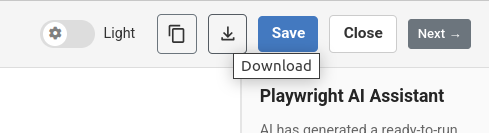
- Download it to your local system
After downloading, simply add the script to your Playwright project’s tests/ folder and run it.
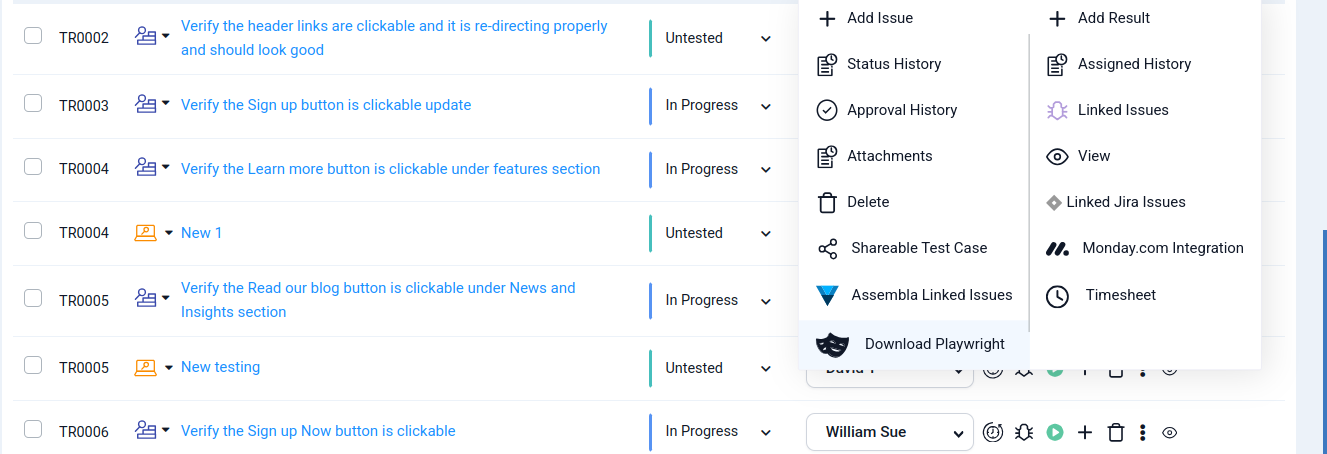
Step 7: Enable Screenshot Setting
use: {
    /* Base URL to use in actions like `await page.goto('')`. */
     screenshot:'on',

  },
Step 8: Add Test Case Mapping
Playwright-generated screenshots to the respective test cases in QA Touch, helping teams quickly debug failures with complete visual and execution evidence.
Go to tests/example.spec.js Open
Meta key should be TRXXX ID (TestRun Code in qatouch), TR001 Replace below code
test.only('TR0035 hastitle', async ({ page }) => {
  await page.goto('https://qatouch.com/');

  // Expect a title "to contain" a substring.
  await expect(page).toHaveTitle(/End to End Test Management Tool | Software Test Management tool | QA Touch/);

  const timestamp = Date.now();
  await page.screenshot({ path: `tests/screenshots/qatouch-${timestamp}.png`});

});
Final Step :
npx playwright test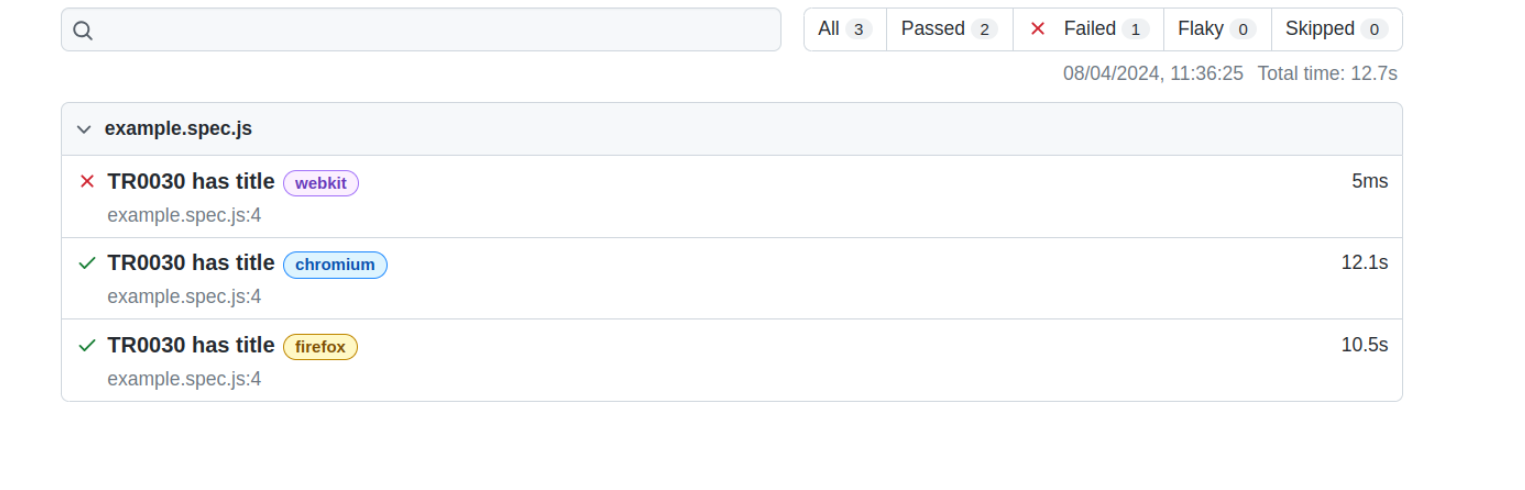
QA Touch Test Result Sync – Successfully